
- Emergency Tree Services
Orlando Emergency Tree Removal: Your Step-by-Step Checklist for Storm Damage and Insurance Claims
Providing professional tree trimming and removal in Orlando, Florida, and surrounding areas.
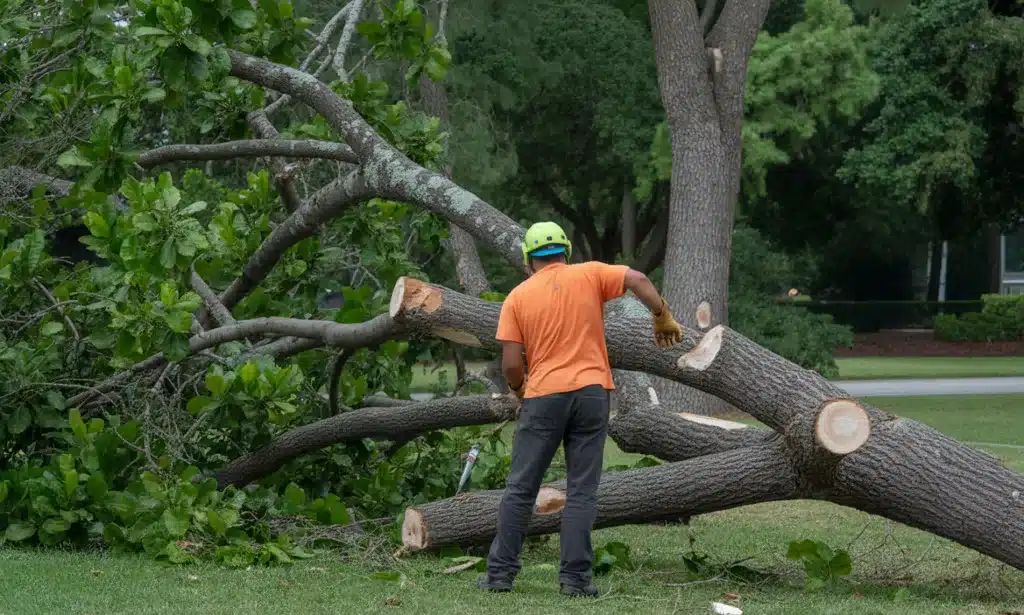
Living in Central Florida means enjoying lush, subtropical landscapes, but it also means facing the annual threat of severe weather, including hurricanes, tropical storms, and intense thunderstorms. When a tree suddenly fails—whether crashing onto your roof, blocking your driveway, or taking down power lines—it’s more than just a cleanup job; it’s an immediate hazard and a high-stress situation.
This comprehensive guide from Tree Amigos Orlando, your local ISA Certified Arborists, provides homeowners and property managers in the Orlando area with the definitive, step-by-step checklist for responding safely and efficiently when a tree falls. Crucially, we’ll cover how to navigate the complex world of tree fell on house insurance Florida claims to ensure your property is protected and your recovery is seamless.
Table of Contents:
Immediate Action: Safety and Initial Damage Assessment
Your first priority must always be safety. A fallen tree, particularly one that has impacted a structure or tangled with utilities, presents immediate danger from unstable limbs, electrical hazards, and hidden structural damage.
Step 1: Secure the Area and Prioritize Safety
Do not attempt to clear or move any large debris yourself. The structure the tree hit may be compromised, and moving the tree could cause further collapse.
Assess the Scene and Check for Utilities
- Check for Downed Power Lines: If the tree is touching or near any downed wires, assume the lines are live. Call 911 and notify your local utility provider (e.g., Orlando Utilities Commission (OUC) or Duke Energy) immediately. Stay at least 35 feet away. This is the single most critical safety step.
- Check for Gas Leaks: If you smell natural gas (often described as rotten eggs), evacuate immediately and call the gas company from a safe distance.
- Check for Injuries: Ensure all occupants of the property are safe and accounted for.
Step 2: Call for Professional Emergency Tree Service Orlando
Once the immediate safety hazards are addressed, contact a reputable, licensed, and insured local professional for emergency tree removal Orlando. Time is critical, especially after a major storm, as reputable companies are booked quickly.
- Look for 24/7 Availability: A true emergency service will answer your call around the clock.
- Verify Credentials: Ensure the company holds current liability insurance and worker’s compensation, especially for the high-risk work of removing a tree from a structure.
Documentation and Navigating the Insurance Claim Process
This is the most critical stage for securing financial coverage. The way you document the damage and approach your insurance carrier will directly affect your claim outcome.
Document Everything Before Any Removal Begins
The insurance company needs proof of the damage before the hazard is removed.
- Take Photos and Videos: Capture the damage from multiple angles. Focus on:
- The tree’s point of failure (trunk, root plate).
- The point of impact on the structure (roof, fence, vehicle).
- Any resulting interior damage (water, collapsed ceiling).
- Protect Your Property: While you must not remove the tree, you are usually required to take “reasonable steps” to mitigate further damage. This often means temporarily covering holes in the roof or windows with tarps and plywood. Keep all receipts for these temporary repairs.
Filing Your Tree Fell on House Insurance Florida Claim
In Florida, tree damage claims can be complex. Typically, your homeowner’s policy will cover the damage to your structure caused by the tree, as well as the reasonable cost of removing the tree from the structure itself.
Covered vs. Not Covered Scenarios
- Covered: A healthy tree is blown onto your house by a storm, or your neighbor’s tree falls onto your garage.
- Generally Not Covered: A tree falls in your yard and causes no damage to a covered structure. The cost to remove this debris is often considered general cleanup and is usually only covered if the policy includes specific “debris removal” coverage (which can vary widely). Also, damage from a tree that was clearly diseased or dead (a “maintenance” issue) may be denied, though this is often debated.
Pro-Tip: When speaking with your adjuster, use the term “hazardous tree removal” when referring to the work of getting the tree off your structure. Be clear that the removal is required to prevent further structural damage.
Understanding Your Policy’s Debris Removal Limits
Most standard Florida homeowner policies have a capped limit for debris removal, often $500 or $1,000, but sometimes higher if the tree is blocking a required structure (like a driveway) or resting on the house.
- Tree Amigos Orlando provides itemized invoices that clearly separate the cost of removing the tree from the structure (which is typically covered) and the cost of the final grinding/haul-away (which may fall under the capped debris limit). This transparency is vital for maximizing your reimbursement.
The Professional Hazardous Tree Removal Process in Orlando
Removing a fallen tree from a structure is highly specialized and dangerous work. It requires certified personnel, specialized equipment (cranes, rigging), and an understanding of the physics of unstable loads.
Assessment and Stabilization
The certified arborist will first assess the structural integrity of the tree and the building. They will use specialized rigging techniques to carefully stabilize and relieve tension from the tree’s load without putting further stress on the compromised structure. This process is essential to ensure no additional damage occurs during the cut.
Sectional Removal Utilizing Advanced Equipment
In dense Orlando neighborhoods, a large crane is often necessary for removal. The tree is cut into manageable sections, and each piece is lifted vertically and away from the home. This minimizes ground damage and ensures a controlled process.
Final Cleanup and Stump Grinding
After the main tree body is removed, the area is cleared. While the insurance may cover the removal from the home, you will need to specify if you want the stump ground down. Stump Grinding eliminates the trip hazard, prevents regrowth, and allows for new sod or landscaping, completing the professional Tree Removal Orlando service.
Avoiding Storm-Related Scams: Choosing the Right Local Partner
After a major storm, “storm chasers”—unlicensed, out-of-state companies—often flood the Orlando area. They may offer low prices, but they typically lack local knowledge, don’t carry the necessary insurance, and may disappear before a job is finished.
Three Non-Negotiable Questions for Emergency Arborists
Before hiring any contractor for hazardous tree removal, verify these three things:
- Do you have an ISA Certified Arborist on staff? (ISA certification shows professional knowledge.)
- Can you provide a certificate of General Liability Insurance? (This protects your property.)
- Can you provide a certificate of Worker’s Compensation Insurance? (This protects you from liability if a worker is injured on your property. This is especially crucial in Florida for construction trades.)
Local Regulations and Grand Tree Protection
In Orlando, regulations often govern the removal of certain large canopy trees (Oaks, Maples, etc.) designated as “Grand Trees.” While Florida Statute 163.045 generally allows for the immediate removal of hazardous trees that pose a present danger to a structure or person without a permit, you still need proper documentation from a certified arborist to prove the tree was genuinely hazardous and avoid potential fines. A local Orlando expert like Tree Amigos understands this regulatory gray area and can provide the necessary documentation.
Proactive Prevention: Storm Prep for Your Orlando Landscape
The best emergency response is prevention. Professional Tree Trimming Orlando services, scheduled annually, can drastically reduce the risk of future storm damage.
The Power of Proactive Pruning
- Deadwood Removal: Dead and diseased limbs are the first to fail in high winds. Regular pruning eliminates these liabilities.
- Canopy Reduction: Thinning the tree canopy allows wind to pass through the branches rather than hitting the tree as a solid wall. This significantly reduces the leverage force on the trunk and roots.
- Root Collar Excavation: Ensuring the tree roots are healthy and not suffocated improves overall structural stability.
Don’t wait for the next storm. For immediate help with emergency tree service Orlando or to schedule a preventative hazard assessment, contact the certified experts at Tree Amigos Orlando today.
Posted on GoogleTrustindex verifies that the original source of the review is Google. I have used Tree Amigos two times. They gave me a quote and came quickly to do the job. They were very professional and kind and did superb work! I would definitely recommend them and will use them again for tree trimming maintenance.Posted on GoogleTrustindex verifies that the original source of the review is Google. I have used them in the past, they lived up to my previous experience with them. Easy to work with and very efficient. Will definitely use them again in the future.Posted on GoogleTrustindex verifies that the original source of the review is Google. We had 4 tall pine trees removed by the Tree Amigos team led by Luis and they performed over and above what was promised. Highly recommended especially for difficult tree removal jobs.Posted on GoogleTrustindex verifies that the original source of the review is Google. Luis and his crew did a great job. I’m very pleased.Posted on GoogleTrustindex verifies that the original source of the review is Google. I have used Tree Amigos many times and always had a positive experience. Recently had a huge tree taken down in my backyard and couldn’t be more pleased with their work!Posted on GoogleTrustindex verifies that the original source of the review is Google. Tree Amigos is always fast and very fair priced.Posted on GoogleTrustindex verifies that the original source of the review is Google. Luis was super responsive and provided a fair price. They were able to grind two stumps by the next business day and were understanding of the needs on site.Posted on GoogleTrustindex verifies that the original source of the review is Google. I have had Tree Amigos help with tree trimming and sod replacement. Great team with great service.Load more