
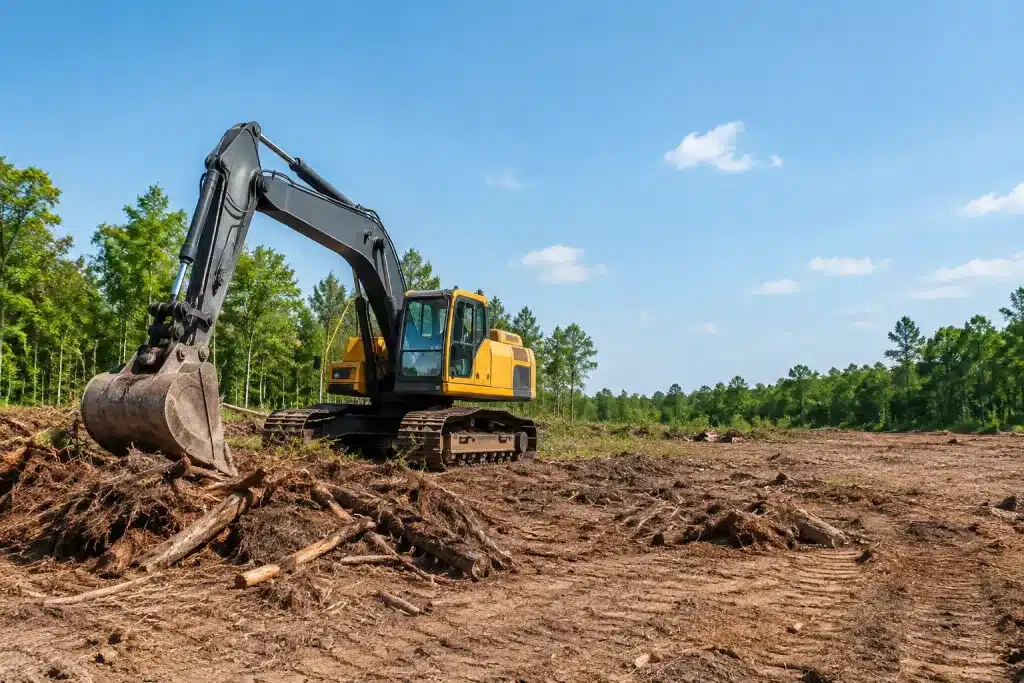
A commercial project can look ready on paper long before the property is ready in the field. Dense tree cover, overgrown brush, hidden debris, unstable access points, and protected trees can quickly affect schedules and budgets. Professional commercial land clearing creates the safe, workable starting point a construction team, property owner, or facility manager needs before the next phase can begin.
For Central Florida properties, clearing work is rarely as simple as cutting down everything in the way. The right approach protects the areas that should remain, accounts for local requirements, keeps crews away from utility hazards, and leaves the site accessible for the work that follows.
What Commercial Land Clearing Should Accomplish
The purpose of land clearing is not simply to make a property look open. It is to prepare a defined area for a specific use, whether that is new construction, an expansion, a parking area, drainage work, utility access, or a redevelopment project.
A properly planned clearing job begins with the end use. A site intended for a building pad has different needs than a property being opened for inspection, fencing, or future development. Some projects require selective tree removal while preserving healthy perimeter trees. Others involve clearing a larger footprint where vegetation, damaged trees, brush, and fallen material prevent safe access.
The best result is a site that is cleaner, safer, and easier for the next contractor to work on without creating unnecessary damage beyond the approved clearing area.
Start With a Clear Scope, Not a Guess
Before equipment arrives, the property owner or project manager should know exactly what needs to be removed, what must be protected, and where material can be staged. A vague request to “clear the lot” can lead to confusion, especially on larger commercial parcels with drainage areas, property lines, easements, or mature trees worth retaining.
A detailed site walkthrough helps establish the scope. During this review, an experienced crew can identify dead or leaning trees, thick brush, access limitations, visible debris, fence lines, and potential hazards. It also gives the owner a chance to point out trees or features that should remain untouched.
For commercial properties, it is wise to document the agreed work area before the job begins. Marking boundaries and protected vegetation reduces the chance of costly mistakes. It also keeps expectations aligned among owners, general contractors, developers, and subcontractors.
Selective Clearing vs. Full Clearing
Selective clearing removes specific trees, brush, and obstructions while keeping designated vegetation in place. It is often the right fit when a property needs better access or visibility but still benefits from existing shade trees and buffers.
Full clearing is more appropriate when a defined project footprint needs to be opened for construction or major site work. Even then, full clearing does not mean careless clearing. Crews still need to account for access routes, nearby structures, overhead lines, underground utilities, drainage patterns, and any trees subject to local protection rules.
The right choice depends on the development plan, the condition of existing trees, site grading needs, and municipal requirements. Preserving the right mature trees can add long-term value to a commercial property, but retaining hazardous, declining, or poorly located trees can create future liability.
Safety Comes Before Production Speed
Clearing a commercial site involves heavy material, large equipment, and unpredictable tree conditions. A tree that appears stable from the ground may have internal decay, compromised roots, or storm damage that changes how it responds during removal. That is why licensed, insured crews and trained operators matter.
Safe work begins by checking for overhead electrical lines, visible utility markers, nearby buildings, traffic areas, and pedestrian routes. Underground utilities must also be located before work starts. A rushed crew can damage a line, block access, or create a dangerous drop zone where people or equipment should not be.
Florida weather adds another layer of planning. Rain can soften soil, limit equipment access, and turn an otherwise manageable site into a rutting or traction problem. During hurricane season, storm-damaged trees may carry extra tension and hidden break points. In those conditions, the fastest option is not always the safest or most cost-effective option.
A professional contractor should have a plan for controlling the work zone, managing traffic where necessary, and removing material as the job progresses. This keeps the property from becoming cluttered and helps maintain safer conditions for everyone on site.
Local Rules Can Affect Your Timeline
Commercial land clearing in Orlando and surrounding Central Florida communities may require more planning than owners expect. Depending on the municipality, parcel, tree type, size, and proposed work, permits or approvals may be required before certain trees can be removed.
Requirements can also differ between incorporated cities and unincorporated areas. A project near wetlands, drainage features, conservation areas, or protected buffers may need additional review. Property owners should not assume that because a tree is on private commercial land, it can automatically be removed without documentation.
An experienced local tree service can help identify questions that should be addressed early, but the property owner and project team should confirm applicable requirements with the proper local authority. Getting clarity before scheduling crews is far easier than stopping a job after work has started.
Access and Equipment Shape the Job Plan
The equipment needed for a clearing project depends on the terrain, vegetation density, tree size, and available access. A broad open parcel may allow efficient equipment movement, while a tight commercial site behind existing buildings may require more controlled removal methods.
Access should be evaluated from the street to the actual work area. Consider gate widths, low branches, pavement load limits, parked vehicles, irrigation lines, curbs, and nearby improvements. If crews cannot safely reach the trees or material, the job may take longer or require a different approach.
This is also where experience protects the budget. A contractor who sees the full site before quoting can identify obstacles that affect labor, equipment use, and cleanup. An unusually low estimate may leave out the work needed to safely handle difficult access, debris volume, or hazardous trees.
Protect the Parts of the Property That Stay
Commercial clearing should create order, not collateral damage. Trees selected for retention need protection from equipment strikes, soil compaction, bark damage, and root disturbance. Their root systems often extend well beyond the visible canopy, so simply avoiding the trunk is not always enough.
If a tree is being preserved near the work area, establish a clear protection zone before clearing begins. Keep vehicles and stockpiled material away from that zone whenever possible. Damage to retained trees may not show up immediately, but it can lead to decline, branch failure, or removal costs later.
Drainage deserves the same attention. Central Florida’s heavy rain can expose weak planning quickly. Clearing changes how water moves across a property, particularly when vegetation that slowed runoff is removed. Coordinating clearing with the broader site plan helps prevent soil movement, standing water, and access problems after the first major storm.
What to Ask Before Hiring a Clearing Contractor
Commercial decision-makers need more than a price. They need confidence that the contractor can complete the work safely, communicate clearly, and meet the project’s requirements.
Ask whether the company is licensed and insured, how it handles hazardous tree removals, and whether it has experience with commercial sites similar to yours. Confirm what is included in the estimate, including debris removal, site access considerations, and any limits on the work area. It is also smart to ask how the crew will protect structures, utilities, retained trees, and neighboring properties.
A reliable contractor should be willing to walk the property, explain the work plan in plain language, and identify issues that could affect cost or timing. Clear answers before work begins are a strong sign that the project will be managed professionally.
Plan Clearing Around the Next Trade
Land clearing should fit the construction schedule, not operate separately from it. Coordinate timing with surveyors, utility crews, grading teams, concrete contractors, and anyone else who needs access to the parcel. Clearing too early can leave an open site exposed to regrowth and storm debris. Clearing too late can delay every contractor waiting behind it.
The most effective projects start with a defined scope, realistic timing, and a crew prepared for the actual conditions on the ground. For commercial property owners across Central Florida, Tree Amigos Orlando brings local tree expertise, insured execution, and practical planning to work that needs to be done right the first time. A well-cleared site gives every next step a safer, stronger place to begin.