
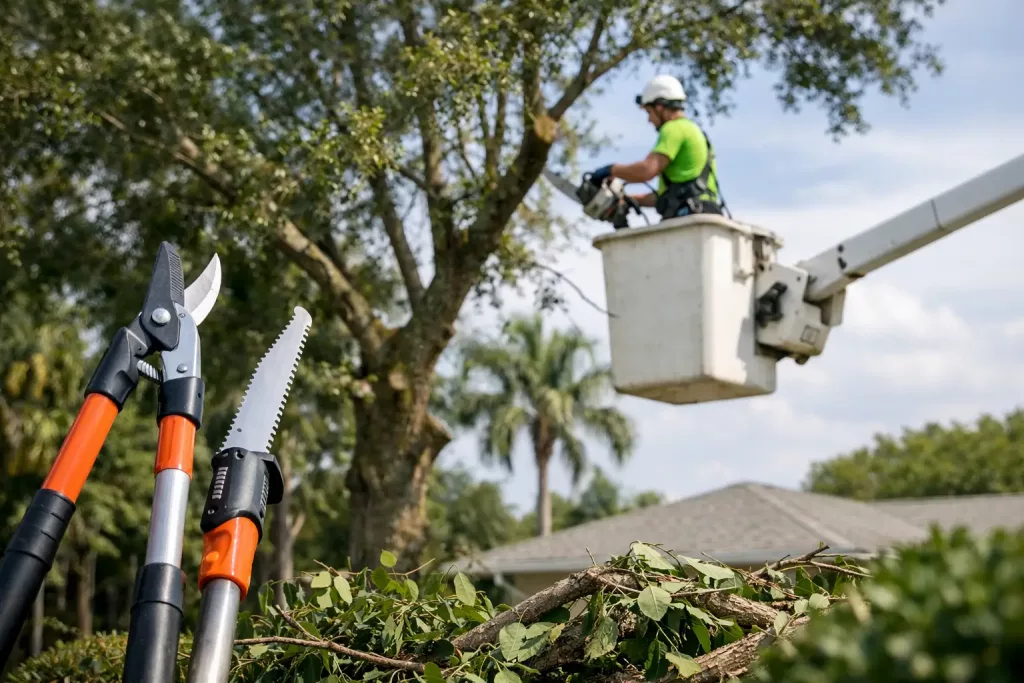
A mature oak limb hanging over a roof, palms crowding a driveway, or branches brushing a power line are not weekend chores. Choosing a Maitland tree trimming company means finding a crew that can improve your property without creating a larger safety issue. The right work protects people, structures, and the long-term health of the trees that make Central Florida neighborhoods feel established.
Tree trimming is often treated as a cosmetic service, but the stakes are higher than a cleaner-looking canopy. Poor cuts can leave a tree vulnerable to decay, encourage weak regrowth, or remove the very limbs that help it withstand wind. For homes, rental properties, offices, and managed communities in Maitland, experienced tree care is a practical investment in safety, curb appeal, and peace of mind.
What a Maitland Tree Trimming Company Should Assess First
A professional crew should not arrive with saws running before they understand the site. Every tree, property line, roofline, and access point changes the scope of the job. A careful assessment identifies the work that truly needs to be done and helps avoid unnecessary cutting.
The first concern is structural risk. Dead, cracked, split, or heavily weighted branches can fail without much warning, especially after heavy rain or strong wind. A trained crew looks for weak branch unions, decay pockets, crossing limbs, cavities, and limbs extending toward homes, vehicles, walkways, or utility infrastructure. The goal is not to strip the canopy. It is to reduce clear hazards while preserving the tree’s natural structure.
Health matters, too. Crowded interior growth can limit airflow and trap moisture, while diseased or damaged limbs may need selective removal. In other cases, a tree has simply outgrown its clearance area. Branches may be rubbing a roof, blocking a security light, obstructing a driveway, or reducing visibility near an entrance. Each situation calls for a different approach.
Access is the other major factor. A large tree in an open front yard is not the same job as one positioned behind a pool enclosure or between neighboring fences. A qualified company should explain how the crew will access the tree, control falling material, protect nearby surfaces, and clean the work area when the job is complete.
Proper Trimming Is More Than Cutting Branches
Good tree work is selective. It respects how a tree grows, where its weight is distributed, and how it will respond after pruning. That is especially relevant in Central Florida, where fast-growing species and storm seasons can turn neglected limbs into property hazards.
Pruning for clearance and safety
Clearance pruning focuses on specific conflicts. It may involve lifting low limbs above a walkway, removing branches that contact a roof, or creating more room around a driveway. Done correctly, this work makes the property easier to use without taking away more foliage than necessary.
Roof clearance deserves particular attention. Limbs rubbing shingles or gutters can cause repeated wear, and branches overhanging the roof give pests an easy route toward the home. Still, an overly aggressive cut can expose limbs and bark to intense sun or leave a tree unbalanced. The answer depends on the species, branch size, tree condition, and amount of clearance needed.
Reducing weight in vulnerable limbs
Long, heavy limbs can become a concern when they extend far from the trunk or carry too much canopy at the ends. A skilled crew may use reduction cuts to shorten a limb back to a suitable lateral branch. This reduces leverage and wind load while keeping the tree’s form more natural than a blunt cut would.
This is different from topping, a harmful practice that removes major upper sections of a tree indiscriminately. Topping often leads to stressed trees and fast, weakly attached shoots. A reputable contractor should be able to explain why selective pruning is the safer long-term choice.
Improving canopy health
Selective thinning can remove deadwood, damaged branches, and certain crossing limbs that rub against one another. The purpose is not to make a tree look bare. Excessive thinning can reduce a tree’s ability to produce energy and may increase sun exposure on branches that were previously shaded.
A company that recommends removing a large portion of a healthy canopy without a clear reason deserves follow-up questions. Ask what problem the proposed cuts solve, how much foliage will be removed, and what the tree should look like after the work is finished.
Why Insurance and Equipment Matter
Tree trimming combines elevated work, heavy material, sharp equipment, and unpredictable branch movement. The lowest quote can become the most expensive option if an uninsured crew damages a roof, fence, vehicle, or neighboring property.
Before hiring, confirm that the company is licensed and insured for the work it performs. Do not be afraid to ask for proof. This is standard due diligence, particularly for large trees, trees near structures, and any project requiring specialized climbing or aerial equipment.
Equipment should match the job. Some trees can be handled safely with climbing techniques, while others require additional machinery or controlled rigging to lower sections away from buildings. The method depends on tree size, location, condition, and site access. What matters is that the crew has a plan for safe execution rather than relying on shortcuts.
A dependable company also takes jobsite protection seriously. That includes identifying utility concerns, establishing a safe work zone, protecting landscape features and hard surfaces where possible, and removing debris promptly. For commercial properties, the crew should coordinate around tenant access, customer traffic, deliveries, and operating hours.
Local Knowledge Helps Avoid Expensive Mistakes
Maitland properties range from older neighborhoods with mature shade trees to commercial sites where tree clearance affects parking, signage, and pedestrian access. The same trimming recommendation does not fit every property.
Local knowledge also matters when a tree may be protected, located near a boundary, or affected by municipal requirements. Property owners should not assume that every tree can be heavily cut or removed without checking the applicable rules. A knowledgeable tree service can identify situations that may require additional review and help customers make informed decisions before work begins.
Storm readiness is another local concern. Trimming cannot make every tree storm-proof, and no responsible company should promise that it can. It can, however, reduce known hazards such as deadwood, compromised limbs, and branches already extending over vulnerable targets. Scheduling preventive work before the busiest weather periods gives homeowners and managers more options than waiting until damage has occurred.
Questions Worth Asking Before You Approve the Estimate
A written estimate should tell you what work is included, not just provide a lump-sum price. You should understand whether the proposal covers pruning, debris removal, access requirements, and any work that may be needed around structures or utility lines.
Ask how the crew will protect your property, whether the tree needs trimming for health, safety, clearance, or a combination of those reasons, and what result to expect once the work is done. If a recommendation feels vague, request a clearer explanation. Good contractors welcome questions because informed customers are better able to evaluate the scope of work.
It is also wise to compare more than price. Consider responsiveness, proof of insurance, experience with similar trees, professionalism during the estimate, and the detail of the proposal. A vague bargain quote can leave room for surprises. A clear estimate from an established local crew provides a better foundation for a safe job.
When Trimming Should Not Wait
Some tree issues are best scheduled as routine maintenance. Others need a faster response. Call for professional help promptly if you see a broken limb suspended in the canopy, a branch contacting a power line, fresh splits in a major limb, a tree leaning after a storm, or large limbs suddenly hanging over an occupied area.
Keep people and pets away from the hazard. Do not climb the tree, pull on a damaged limb, or attempt to cut branches near electrical service. Even a limb that appears manageable from the ground can shift unexpectedly once it is cut.
For homeowners and property managers who want work done right the first time, Tree Amigos Orlando brings more than 25 years of professional tree care experience to the job. A well-maintained tree should add shade, character, and value to your Maitland property, not leave you wondering what will come down in the next storm.