
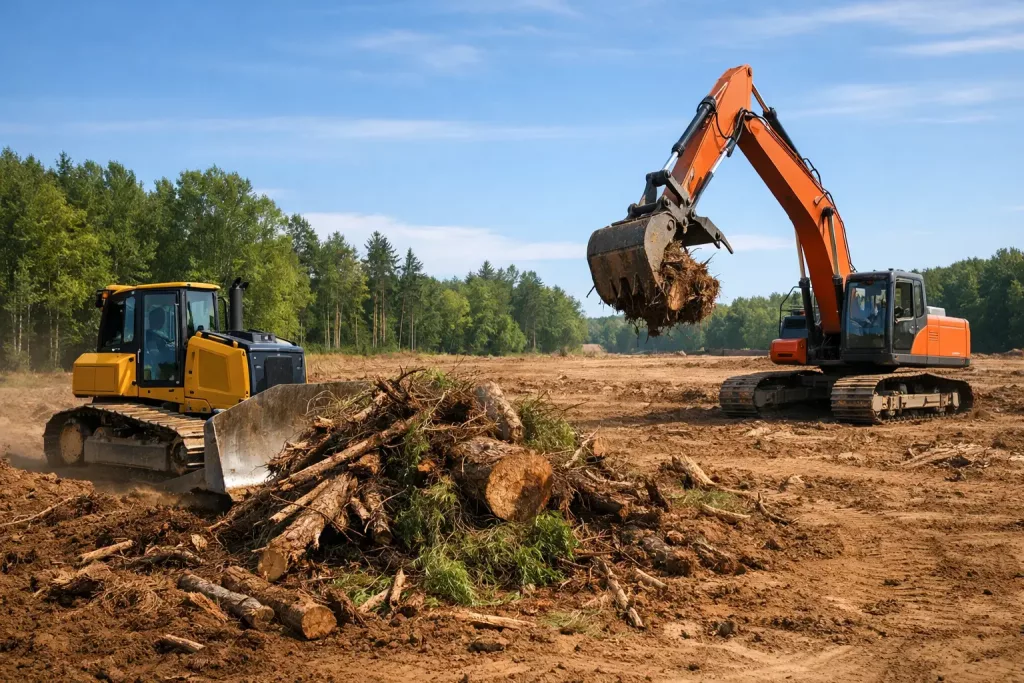
A construction site is a blank canvas, but before the first string lines are pulled, excavators arrive, or materials drop, that canvas usually needs a lot of work. Trees, brush, rocks, uneven dirt, and debris all stand in the way. That is why land clearing for new construction happens so much. It is not just about making space; it is about creating a stable, properly graded, and accessible starting point for a property that will stand for decades.
The basic idea of land clearing is universally understood: take the wild out of a lot and make it ready for building. But the details vary wildly. A small residential lot in an established neighborhood has very different demands than a virgin, heavily wooded multi-acre site intended for a new commercial plaza. The type of land, the local laws, the intended use, and even the type of soil under the brush all dictate how the clearing phase of a new construction project unfolds.
Table of Contents
- What land clearing for new construction actually includes
- Why the clearing phase affects the entire project
- The difference between clearing a lot and preparing a buildable site
- What should stay and what should go
- Common problems that show up when clearing is handled poorly
- How to choose a contractor for land clearing for new construction
- Timing matters more than most owners think
- Why a careful start saves money later
What land clearing for new construction actually includes
At its most basic level, clearing is the removal of vegetation, rocks, and debris from a building site. It starts with the absolute basics: taking down trees and grinding stumps. Stump removal is particularly important because left behind, decaying stumps will create sinkholes over time, destabilizing the soil where a foundation might eventually go. Many sites require selective clearing, where certain trees or natural buffers are preserved while the rest of the space is opened up.
Beyond the visible matter, there is an undergrowth to deal with. Brush, shrubs, and root systems have to be extracted. If roots are simply buried under new fill dirt, they will eventually decompose and create voids. Once the heavy vegetation is gone, clearing teams start looking at the dirt itself. Topsoil is often stripped and stockpiled, as it is too soft to build on but highly valuable for landscaping later. Large rocks are dug up and moved, leaving a clean dirt surface.
Why the clearing phase affects the entire project
A rushed clearing job can create problems that show up weeks or months later. If a site is not properly cleared, excavators hit hidden stumps when digging for footers, delaying the foundation pour. If roots are left to rot, settling occurs later, cracking concrete slabs or asphalt driveways. The clearing phase sets the baseline for the soil stability of the whole site.
Drainage is another major factor. Central Florida properties often deal with sandy soils, heavy seasonal rains, and strict grading regulations. If clearing is done without keeping final site drainage in mind, water can pool in the wrong places, turning a dry construction site into a swamp after a heavy rain. That means delays, added expense, and a lot of mud to manage.
Then there is the permit and compliance side. Depending on the property, local tree ordinances or environmental regulations often dictate what can and cannot be cut down. If a crew clears an area that was supposed to be protected, the property owner is the one who faces the fines and the project can be stopped by local inspectors.
The difference between clearing a lot and preparing a buildable site
It is possible to clear a lot without making it ready to build on. That is where a lot of property owners get off track.
A heavily wooded lot can be knocked down and hauled off, leaving an empty patch of dirt. But if that dirt is deeply rutted from heavy equipment, filled with loose soil, and uneven, it is not a buildable site. Preparing a site implies grading the dirt, addressing soil compaction, and establishing the rough elevations needed for the foundation and drainage. It means ensuring the pad where the house or building will sit is solid and stable.
For new construction, clearing is just step one. Site preparation is step two. A good contractor understands where the house will sit, where the driveway will go, and where utilities need to run. They don’t just clear everything; they clear with the final construction plan in mind. That prevents a scenario where a lot is cleared, but the next contractor has to come in and spend days fixing the dirt before they can actually start work.
What should stay and what should go
This is where experience matters. The cheapest clearing option is often to clear-cut the entire site, but that is not always the best option.
Trees that are diseased, structurally compromised, located in the footprint of the new structure, or too close to where the foundation will go must be removed. The same goes for any vegetation that interferes with planned utility lines, drainage swales, or safety zones.
But mature, healthy trees can add significant value to a finished property. They provide immediate shade, improve curb appeal, and help with soil retention. If a property owner wants to keep certain trees, the clearing process has to be much more careful. Heavy equipment cannot drive over the root zones of protected trees without causing damage that will slowly kill the tree over the next few years.
The density of neighborhood lots also plays a role. In tighter subdivisions, privacy buffers are often highly valued. Leaving a strategic line of trees or brush along the property line can make a massive difference in the feel of the finished home.
Common problems that show up when clearing is handled poorly
Bad clearing almost always creates a chain reaction. One of the most common issues is buried debris. If a contractor tries to save time and money by burying logs, branches, and stumps instead of hauling them away, it is a ticking time bomb.
That buried organic material will eventually rot. As it rots, the ground above it settles. If that settling happens under a driveway, the concrete cracks. If it happens under a lawn, a sinkhole forms. Digging it up and fixing it after the fact is incredibly expensive.
Property damage is another risk. Using the wrong size equipment for a lot, or operating it carelessly, can damage neighboring properties, crack nearby sidewalks, or break underground utility lines. A professional contractor knows how to operate efficiently without causing collateral damage.
How to choose a contractor for land clearing for new construction
The right contractor should do more than just own a tractor. Because the clearing phase sets the stage for the rest of the build, they need to understand construction, not just tree removal.
Look for a contractor that is licensed and insured. Ask about their experience with new construction sites. Do they handle stump removal? Do they haul away the debris or leave it piled up? Do they have the right equipment for the specific job? A massive excavator might be perfect for a ten-acre site, but it is the wrong tool for a tight residential lot where precision is needed.
Communication is also critical. A good contractor will ask to see the site plans. They will want to know where the structure is going, where the utilities will be, and what trees the owner wants to keep. If a contractor just shows up ready to knock things down without asking those questions, it is a red flag.
Timing matters more than most owners think
The best time to clear a site is not always “as soon as possible.” In areas with distinct wet and dry seasons, clearing a lot right before a month of heavy rain can turn the site into a mud pit, making it impossible for the foundation crew to get started. Sometimes it is better to wait until closer to the actual construction start date.
However, waiting too long can also cause delays. If a lot requires environmental permits, tree removal permits, or special surveying, that paperwork has to be completed before the heavy equipment shows up. Rushing the clearing phase can lead to mistakes or permit violations that halt the entire project.
Why a careful start saves money later
No one wants to spend more money than they have to on the dirt before the house is even built. But cutting corners on the clearing phase almost always costs more in the long run.
A well-cleared, properly prepped site makes the rest of the project easier. Excavators do not have to fight hidden stumps, foundation crews have a solid base to work on, and landscapers have good soil to use. It sets the tone for a smooth, efficient build.
In Central Florida, where the land can hide everything from sandy sinkholes to massive oak root systems, a professional land clearing job is the first line of defense for a new construction project.
Before the first footer is poured or the first piece of lumber is delivered, the ground has to be right. A quality clearing job ensures that the blank canvas is actually ready for the masterpiece.