
Table of Contents
- What affects dead tree removal cost?
- Typical dead tree removal cost ranges
- Why one quote can be much higher than another
- Hazard level matters more than homeowners expect
- Hidden factors that can change the final price
- How to compare estimates the right way
- When dead tree removal cost is worth paying now
- Dead tree removal cost and peace of mind
A dead tree can sit quietly for months, then fall all at once after a hard rain, a wind event, or even a routine afternoon storm. That is why dead tree removal cost is not just about cutting wood – it is about removing risk before the tree damages a roof, blocks a driveway, or puts people in danger.
If you are looking at budgets for removal, the fastest way to understand pricing is this: no two dead trees carry the same level of hazard. A small dead tree in an open yard is one thing. A tall, brittle tree leaning over a house, power line, fence, or parking area is another. The gap in price comes from the planning, equipment, crew size, and safety precautions needed to remove it without causing a bigger problem.
What affects dead tree removal cost?
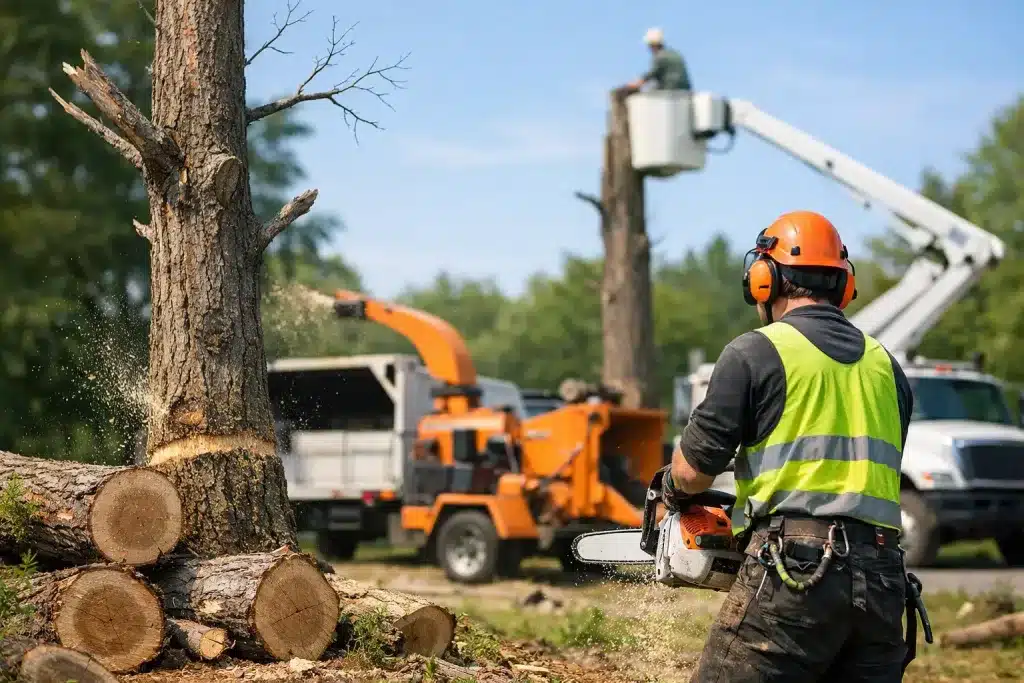
The biggest factor is tree size. Height, trunk diameter, canopy spread, and overall weight all matter because larger trees take more time to dismantle and haul away. A dead tree also tends to be less predictable than a healthy one. Brittle limbs can snap early, the trunk can be hollow, and the root system may be compromised. That extra risk often means a more careful removal process.
Location is just as important as size. A dead tree in a wide-open area is generally less expensive to remove than one squeezed between a house, garage, pool screen, fence line, or neighboring property. Limited access can require climbing, rigging, or specialty equipment rather than a straight felling cut from the ground. If crews cannot easily get trucks or equipment close to the work area, labor time goes up.
Condition plays a major role too. People sometimes ask if a dead tree should be cheaper to remove because it is no longer growing, but that is often not the case. Dead wood is more fragile. Sections may need to be lowered in smaller pieces to avoid sudden breaks. If the tree is partially fallen, split, storm-damaged, or hanging over a structure, the complexity increases quickly.
Then there is cleanup. Some quotes include cutting, hauling, loading, and site cleanup as part of the package. Others may price removal and debris hauling separately. It is always worth asking exactly what is included so you can compare estimates fairly.
Typical dead tree removal cost ranges
For many property owners, the first question is simple: what should I expect to pay? The honest answer is that dead tree removal cost can range from a few hundred dollars for a small, low-risk tree to several thousand dollars for a large hazardous removal near structures or utilities.
A smaller dead tree with easy access may fall on the lower end of the range. Medium-sized trees usually cost more because they require more cutting time, more debris handling, and more crew coordination. Large dead trees, especially those close to homes or commercial buildings, often land at the highest end because the work has to be performed in controlled sections.
In Central Florida, local weather matters. Saturated soil, lightning damage, decay accelerated by heat and moisture, and storm exposure can all affect how stable a dead tree really is. What looks upright from the street may already be compromised below grade or at the base. That is why onsite inspections matter more than rough online pricing.
Why one quote can be much higher than another
When two companies give very different prices, it usually comes down to scope and risk management. One crew may be quoting a basic cut-and-remove on the assumption that access is easy. Another may be pricing for proper rigging, traffic control, protection of nearby surfaces, licensed and insured labor, and full debris removal.
That does not automatically mean the higher quote is better, but it does mean you should ask questions. Are they insured? Are they experienced with hazardous removals? Does the estimate account for roof protection, utility awareness, and safe lowering methods? Are permits or local rules part of the plan if needed?
With dead trees, the cheapest number can become expensive fast if the work is rushed or underplanned. Property damage, injuries, and incomplete cleanup cost more than doing the job right the first time.
Hazard level matters more than homeowners expect
A tree does not have to be huge to be dangerous. A modest dead tree leaning over a play area or parked cars may require more precision than a taller tree with nothing around it. The hazard profile includes the tree’s angle, structural stability, nearby targets, and how likely pieces are to break unpredictably during removal.
This is also why emergency situations usually cost more. If a tree has already crashed, uprooted, or dropped major limbs after a storm, crews may need to respond quickly and work around unstable sections. Urgent scheduling, added manpower, and higher-risk conditions affect price.
Hidden factors that can change the final price
Some of the biggest pricing differences come from details property owners do not always notice at first glance. Access gates may be too narrow for equipment. Soft ground may limit where trucks can park. Overhead utility lines may require a different removal strategy. Decorative hardscapes, irrigation components, and tight side yards can all slow the process.
Hauling volume is another factor. Dead trees can be lighter in some cases, but large branch systems still create a significant amount of debris. If the tree has multiple trunks or a dense crown, cleanup can take longer than expected.
There is also the issue of permits and local regulations. In some areas, even dead or hazardous tree removal may require documentation or approval depending on species, size, and site conditions. A professional local company should be able to flag that early so you are not surprised later.
How to compare estimates the right way
The best estimate is not always the lowest or the highest. It is the one that clearly explains the work. You want to know whether the quote includes sectional removal, hauling, cleanup, and any special equipment. You also want confirmation that the company is licensed and insured.
A good estimate should reflect the actual risk on your property, not just a generic per-tree price. If one contractor gives a number without inspecting the tree or asking about access, structures, and hazards, that is a red flag. Dead tree removal is not a one-size-fits-all service.
This is where experience matters. A seasoned crew can spot issues such as trunk decay, weak unions, hidden lean, or compromised roots before work starts. That protects your property and helps prevent change orders halfway through the job.
When dead tree removal cost is worth paying now
Many owners wait because the tree has not fallen yet. That is understandable, especially if the tree is not in the center of daily activity. But delayed removal can increase cost rather than save money.
Once a dead tree starts shedding large limbs, leaning more noticeably, or showing signs of base decay, the removal often becomes more complicated. More complicated usually means more labor, more equipment, and more risk. If it fails during a storm, you may also be dealing with emergency response instead of planned removal.
Planned work tends to give you more scheduling flexibility and a better chance to protect surrounding property. It also gives you time to get multiple estimates and make a careful decision instead of reacting under pressure.
Dead tree removal cost and peace of mind
For homeowners, the real value is often peace of mind. For commercial properties, it is also about liability, tenant safety, curb appeal, and keeping access areas clear. In both cases, paying for qualified removal is really paying to control risk.
That is especially true in storm-prone parts of Florida, where dead trees rarely improve with time. They become drier, weaker, and less predictable. A trusted local crew with real hazardous removal experience can assess the tree, explain the risk profile, and give you a quote based on the actual conditions on site.
Tree Amigos Orlando has built its reputation around exactly that kind of work – safe, licensed, and dependable service for property owners who need clear answers and reliable execution.
If you are looking at a dead tree and wondering whether to act now or wait one more season, the safer move is usually to have it evaluated before the next storm decides for you.