
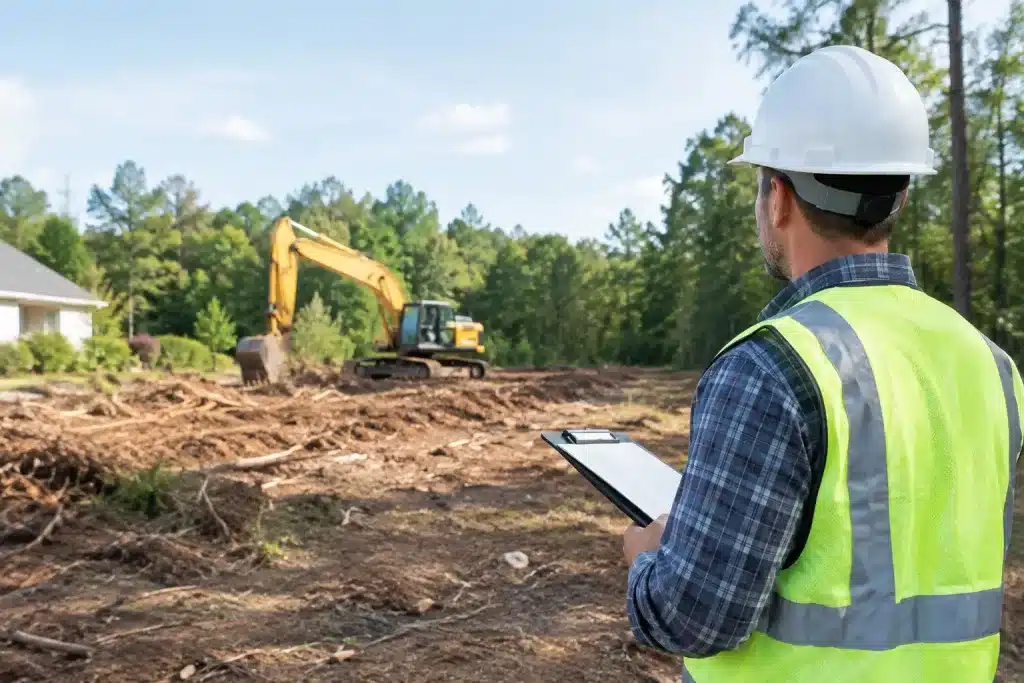
A successful clearing project is decided before the first piece of equipment arrives. To prepare property for lot clearing, you need more than a rough idea of what should come down. You need clear boundaries, safe access, utility awareness, and a plan for the trees, structures, and people that must remain protected.
For Orlando-area property owners, preparation also means accounting for wet ground, storm season, local tree rules, and closely spaced neighboring homes. Taking a few deliberate steps upfront helps prevent delays, damaged property, unnecessary removal, and costly changes once work is underway.
Start With the Purpose and Limits of the Clearing Work
First, define why the lot is being cleared. A future home site, commercial expansion, drainage improvement, fence line, or access road may each require a different amount of clearing. Marking an entire parcel for removal when only a building pad or pathway needs attention can add unnecessary cost and eliminate valuable shade.
Walk the property with the proposed end use in mind. Identify the areas that need to be opened, the vegetation that can remain, and the locations where equipment will enter and exit. If you have a survey, site plan, or construction drawing, keep it available. These documents give the crew a reliable reference for property lines, easements, setbacks, and planned improvements.
Do not rely only on an old fence, a row of shrubs, or a neighbor’s verbal estimate of the boundary. A clearing crew needs confirmed limits, especially where lots meet, drainage areas cross the property, or utility easements are present. When boundaries are unclear, arrange for a survey or have the lines professionally identified before authorizing work.
Inspect Trees Before You Prepare Property for Lot Clearing
Not every tree within a work area should automatically be removed. Mature trees can provide shade, screening, habitat, and real value to a finished property. At the same time, a tree that is leaning, declining, split, or growing too close to a future structure may create a long-term safety concern.
Look for visible issues such as dead limbs, cavities, fungal growth near the base, cracked trunks, exposed roots, or branches extending over roofs and power lines. These conditions do not always mean removal is necessary, but they should be assessed by a qualified tree professional before construction begins.
Also identify trees you want to save. Protection is more than tying a ribbon around the trunk. Heavy equipment can compact soil and damage roots well beyond the visible canopy. A protected tree needs a clearly marked no-entry zone that keeps vehicles, material piles, and excavation away from its root area. It may be possible to work around a tree, but it depends on the available space, the planned grade changes, and the tree’s condition.
Confirm Permits, Restrictions, and Tree Requirements
Tree and land clearing requirements can vary by municipality, neighborhood, and property type. In Central Florida, rules may apply to protected species, tree size, wetlands, conservation areas, shoreline buffers, and work within easements. An HOA or commercial property agreement may create additional restrictions.
Before scheduling work, contact the appropriate local permitting office or ask your contractor what approvals may be needed for the scope of the project. Do this early. Waiting until equipment is scheduled can turn a simple project into a delayed one.
Keep written documentation of any approvals, conditions, or required inspections. If the project involves a new build or major renovation, coordinate the clearing plan with the builder, engineer, and site contractor. The goal is to avoid clearing an area that later needs to stay undisturbed for drainage, utility access, or permitting compliance.
Locate Utilities and Plan Safe Equipment Access
Underground and overhead utilities are among the biggest risks on any clearing job. Buried electric, gas, water, sewer, irrigation, cable, and communication lines may not be visible from the surface. Arrange for utility lines to be marked before work begins, and make sure those markings are still visible on the day of service.
Overhead lines need equal attention. Low branches near service lines, transformers, or poles require careful planning. Never assume a branch can be cut safely because it appears to be near, rather than touching, a line. Electrical hazards demand trained crews, proper equipment, and utility coordination when necessary.
Access is the next practical concern. Equipment may need enough room to enter, turn, and leave without damaging gates, sidewalks, driveways, septic components, or neighboring property. Measure narrow side yards and note low-hanging limbs, decorative features, parked vehicles, and soft ground. If access crosses a shared drive or private road, get permission and communicate the schedule ahead of time.
A helpful pre-work checklist includes these four items:
- Clearly marked property lines and work boundaries
- Located underground utilities and identified overhead hazards
- An equipment route with obstacles removed or protected
- A designated area for debris handling and crew parking
Prepare the Site and Protect What Stays
Clear personal items from the work zone before the crew arrives. Move vehicles, outdoor furniture, planters, play equipment, trailers, and stored materials well away from the anticipated drop zone and access route. Close gates, secure pets, and let household members know that active tree work requires them to stay outside the work area.
If a fence, pool enclosure, irrigation control box, or other feature will remain nearby, point it out during the estimate and again before work begins. Photos taken before the project can be useful for documenting existing conditions. This is especially smart on properties with tight access or shared boundaries.
Think about debris management early. Ask where material will be placed temporarily, how the site will be kept orderly, and whether the crew needs room for trucks or specialized equipment. A good plan keeps access routes clear and reduces the chance of material being placed where it blocks construction, drainage, or emergency access.
Consider Weather, Ground Conditions, and Timing
Florida weather can change the safety and cost of a clearing project quickly. Heavy rain can soften soil, make equipment access difficult, and increase the risk of rutting or damage to areas you intend to preserve. High winds and lightning can also stop tree work for safety reasons.
If possible, avoid scheduling major clearing immediately before a forecasted period of heavy rain. This is not always practical, particularly when a storm-damaged tree requires urgent attention, but timing matters when the work involves broad equipment access. A short delay can protect the site and make the job more efficient.
Storm season also changes how you should prepare. Remove loose items from the yard, make sure the crew has a dependable contact number, and do not leave access blocked by vehicles. If the work is part of a construction timeline, build in a little flexibility for weather-related rescheduling rather than forcing unsafe conditions.
Communicate With Neighbors and Your Contractor
Lot clearing can be noisy and may temporarily affect shared access, parking, or views. A brief conversation with adjacent neighbors is often the right move, particularly for work near a property line. Let them know the anticipated date, general work hours, and whether trucks may be using the street nearby.
Your contractor should also know about site-specific concerns before arriving. Mention gates with limited clearance, fragile pavement, septic systems, irrigation, security codes, tenant schedules, animals, and any tree you want evaluated rather than automatically removed. Clear communication gives the crew the information needed to work safely and efficiently.
Choose a licensed and insured company that can explain the work scope in plain language and identify risks before cutting begins. Tree Amigos Orlando brings more than 25 years of local experience to projects where safety, property protection, and dependable execution matter.
The best preparation gives everyone a clear picture of what the site should look like when the work is complete. Set the boundaries, protect what has value, address hazards early, and give the crew safe room to work. That preparation turns lot clearing from a disruptive first step into a confident start for what comes next.