
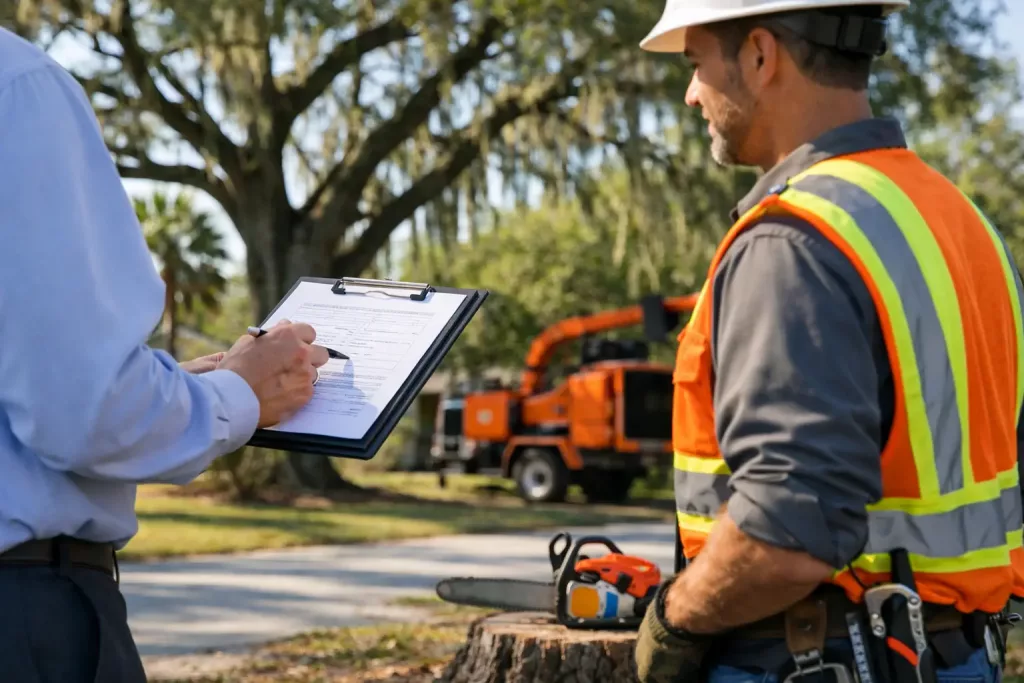
As a homeowner keeping your property safe, clean, and beautiful, tree care is often near the top of your list. However, before you bring in the saws and equipment, there is an essential step you cannot afford to skip: checking the condition of the tree and understanding local removal regulations.
Tree ordinances vary by municipality, county, and property type. Failing to know the rules can lead to heavy fines, legal issues, and delays. This guide breaks down everything you need to know about navigating tree permits in Florida to keep your landscape projects on the right side of the law.
Table of Contents
- Do you need a tree permit before removal?
- What usually determines whether a permit is required?
- When a hazardous tree changes the answer
- Why homeowners get tripped up by the permit process
- What to check before any tree work starts
- Do you need a tree permit for pruning or storm cleanup?
- Commercial properties and larger sites face more scrutiny
- The safest approach when you are not sure
Do you need a tree permit before removal?
The short answer is: it depends heavily on where you live and the condition of the tree.
Many municipalities in Central Florida require a permit before removing a protected status, specimen tree, or a standard tree that meets specific size requirements. However, Florida state law (specifically Florida Statute 163.045) provides certain exemptions for residential properties if a tree poses an unmitigable danger to persons or property, which can sometimes bypass local rules. It is critical to have an assessment from a certified arborist to confirm this before taking action.
What usually determines whether a permit is required?
When local governments set their tree protection rules, they generally look at three primary factors: size, species, and location on the property. Permit requirements are often based on the tree’s diameter at breast height (DBH), meaning larger, more mature trees are heavily protected.
Species matter too. Native or heritage species receive greater protection than invasive or non-native trees. For example, a massive Live Oak will almost always require a permit, whereas an invasive tree species like a Brazilian Pepper or Camphor tree might be removed without any official permission at all.
Finally, the location of the tree plays a major role. Trees that sit within designated buffer zones, wetlands, or resource protection areas face much stricter guidelines than a tree sitting right next to a residential driveway.
When a hazardous tree changes the answer
There is one major exception that changes the entire process: the presence of an immediate safety hazard.
If a tree is dead, dying, diseased, or structurally compromised to the point of being a danger, the normal permit delays are often waived under state law. However, documentation is everything. The law requires a certified arborist or a licensed landscape architect to inspect the tree and document in writing that it poses an unmitigable hazard before removal happens without a standard municipal permit.
Why homeowners get tripped up by the permit process
The permit process surprises many homeowners because they assume that because a tree sits on their private property, they have an absolute right to remove it. This is a misconception that can cost thousands of dollars in code enforcement fines.
Another common trap is trusting an unlicensed tree removal contractor who claims a permit isn’t necessary. If they cut down a protected tree illegally, the homeowner—not the contractor—is ultimately held financially and legally responsible by the local city or county board.
What to check before any tree work starts
Before allowing any equipment onto your property, always complete this three-step verification checklist:
- Verify Local Ordinances: Check both your city and county tree removal rules, as they often overlap.
- Get an Arborist Assessment: Have an ISA Certified Arborist evaluate whether the tree is protected or qualifies as an unmitigable hazard.
- Confirm Contractor Credentials: Ensure your chosen tree service provider is fully licensed, insured, and well-versed in navigating local permit workflows.
Do you need a tree permit for pruning or storm cleanup?
For standard maintenance pruning, permits are rarely required. You are generally free to trim dead branches or clear limbs away from your roofline.
However, extreme pruning—such as removing more than 25% of a tree’s canopy or “topping” a tree—can be classified as tree abuse or unauthorized destruction, which carries the same steep penalties as illegal removal. During emergency storm cleanup, local governments often relax permit enforcement temporarily to clear roads and homes, but permanent structural removals after the storm passes still require proper documentation.
Commercial properties and larger sites face more scrutiny
If you own or manage a commercial space, a multi-family complex, or a large undeveloped site, the rules are vastly stricter. State-level residential exemptions do not apply to commercial properties. Every single tree removal on a commercial site almost always requires a formal permit, a detailed site plan review, and mandatory tree replacement mitigation or payments into a local tree canopy fund.
The safest approach when you are not sure
Tree permits can feel complex, but the risks of ignoring them are far too high. The absolute safest approach is to work with an experienced team that handles the inspection, documentation, and permitting process for you from start to finish.
At Tree Amigos, we take the guesswork out of tree care. Whether you need a standard removal permit or a certified arborist assessment to clear a hazardous tree under Florida law, our team ensures your property stays beautiful, safe, and perfectly compliant with all local regulations.