
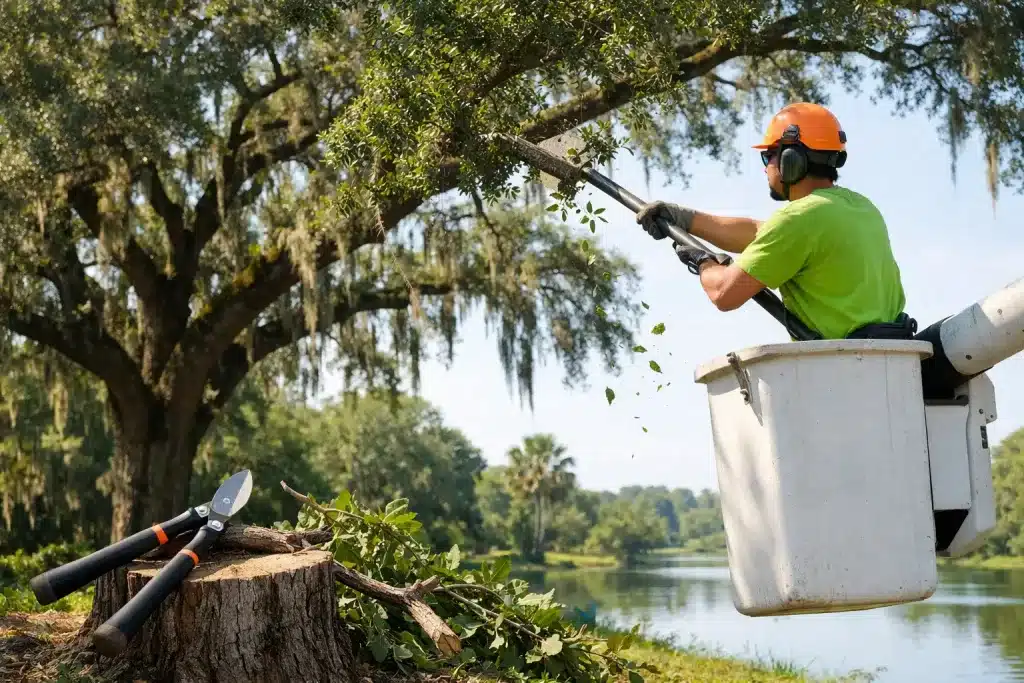
A lot of oak tree problems start with good intentions and bad timing. Property owners see a low limb over the driveway, a branch rubbing the roof, or a canopy getting heavy before storm season, and they want it handled fast. That makes sense. But when to trim oak trees is not just about convenience. The wrong timing can stress the tree, attract pests, and create avoidable risk for your property.
In Central Florida, timing matters even more because oaks deal with long growing seasons, heat, humidity, storms, and occasional disease pressure. A healthy trim done at the right time can improve structure, reduce hazards, and help preserve one of the most valuable trees on your property. A poorly timed or aggressive cut can do the opposite.
Table of Contents
- When to Trim Oak Trees for Best Results
- Why Timing Matters So Much With Oaks
- When Spring or Summer Trimming Makes Sense
- Signs Your Oak Tree Should Be Trimmed Soon
- How Much Oak Trimming Is Too Much
- Special Considerations in Central Florida
- Should You Trim Oak Trees Yourself?
- What to Expect From a Proper Oak Trimming Plan
When to Trim Oak Trees for Best Results
For most oak trees, the best time to trim is during the dormant season, usually late fall through winter. In our area, that often means roughly November through February, depending on weather patterns and the condition of the tree. During dormancy, oaks are under less stress, and pruning cuts are less likely to trigger the kind of active growth that can leave the tree vulnerable.
This window is preferred for both health and safety. The tree is not pushing as much energy into new growth, visibility through the canopy is often better, and crews can make cleaner structural decisions. If you are pruning for clearance, deadwood removal, weight reduction, or shape correction, dormant-season trimming is typically the safest plan.
That said, not every oak issue can wait for winter. If a branch is cracked, hanging, storm-damaged, or threatening a home, road, parking area, or pedestrian space, safety comes first. Hazard pruning may need to happen immediately, even outside the ideal season.
Why Timing Matters So Much With Oaks
Oak trees are strong, long-lived, and valuable, but they do not respond well to careless pruning. Fresh cuts create openings, and those openings can expose the tree to insects and pathogens. In many regions, oak wilt is the big concern. While oak wilt is more widely discussed in other parts of the country than in Central Florida, the larger point still applies – pruning wounds are more vulnerable when insects are active and the tree is under stress.
Spring and summer are usually the riskiest times for routine trimming. The tree is actively growing, temperatures are higher, and pest activity is more common. Heavy pruning during this period can also remove too much shade-producing foliage right before the hottest part of the year. That can increase stress on both the tree and the surrounding landscape.
For homeowners, the practical takeaway is simple. If the work is routine and not urgent, schedule it in the cooler months. If it is urgent, have it evaluated by a qualified tree professional who can limit cuts to what is necessary and avoid over-pruning.
When Spring or Summer Trimming Makes Sense
There are exceptions, and this is where experience matters. Not every job fits neatly into a winter schedule.
If you have storm damage, split limbs, branch failure, or obvious clearance hazards, waiting can be the wrong call. The same is true if dead limbs are dropping, branches are scraping structures, or the canopy is blocking critical visibility on a commercial site. In those cases, targeted trimming is about reducing risk, not doing a full aesthetic prune.
Light corrective pruning can also be appropriate on younger oaks when the goal is to improve structure early and prevent larger issues later. The key is restraint. Small cuts made for sound structural development are very different from thinning a mature canopy in the middle of a hot, wet summer.
This is why a blanket rule can be misleading. When to trim oak trees depends on whether the work is preventive, corrective, or emergency-related.
Signs Your Oak Tree Should Be Trimmed Soon
A healthy oak does not need constant cutting, but it should be monitored regularly. Some signs point to routine maintenance, while others suggest a more urgent problem.
Deadwood is one of the clearest indicators. Dead branches can fall without much warning, especially during wind and rain. Crossing limbs are another issue because they rub, damage bark, and create weak points over time. Low branches over driveways, roofs, sidewalks, or pools can become both a nuisance and a liability.
You may also notice a canopy that has become unbalanced, overly dense, or too close to structures. On commercial properties, clearance over signage, parking lots, and access lanes often becomes a safety and visibility concern. In other cases, the warning signs are more serious: cracks at branch unions, limbs with visible decay, or sections of the crown that are thinning unexpectedly.
If you see any of those conditions, it is worth having the tree assessed before the next major storm cycle. In Orlando and surrounding areas, a branch that looks manageable on a calm day can become a major problem once strong winds arrive.
How Much Oak Trimming Is Too Much
One of the biggest mistakes property owners make is assuming more trimming means more safety. In reality, over-pruning can weaken an oak, encourage poor regrowth, and leave large limbs exposed to sun stress.
As a general rule, mature oaks should not have a large percentage of their live canopy removed at one time. The exact amount depends on the species, age, health, and purpose of the pruning, but aggressive thinning or topping is rarely the right answer. Topping is especially harmful because it creates large wounds and often leads to fast, weakly attached regrowth.
Good pruning is selective. It removes what is dead, damaged, poorly attached, or interfering with safe clearance while preserving the tree’s natural structure. The goal is not to make the tree smaller at any cost. The goal is to make it safer, healthier, and better balanced.
Special Considerations in Central Florida
Central Florida adds a few local factors that should shape your trimming schedule. Hurricane season pushes many property owners to think about pruning in late spring and summer, but by then, the ideal window for routine oak trimming may already be closing. That is why proactive winter planning matters.
If you know your oak has overextended limbs, dense end weight, or branches hanging over key structures, it is smarter to address those issues before storm season ramps up. Waiting until the first tropical weather alert usually means tighter schedules, more urgency, and fewer options.
Local growth rates also play a role. Because trees here stay active longer than they do in colder climates, the line between dormant and active seasons can be less dramatic. That makes local knowledge important. A contractor familiar with Central Florida conditions can better judge timing, tree response, and site-specific risk.
Municipal rules can matter too, especially for protected trees or large removals tied to development and site changes. Trimming work that seems straightforward can sometimes overlap with local requirements, particularly on commercial properties and larger lots.
Should You Trim Oak Trees Yourself?
Small, reachable dead twigs or minor clearance cuts may be manageable for a property owner with the right tools and judgment. But mature oak pruning is not a casual weekend project. These trees are heavy, valuable, and often positioned near homes, fences, vehicles, and power lines.
The risk is not just personal injury. Improper cuts can lead to bark tearing, decay entry, poor healing, and long-term structural weakness. It is also easy to remove the wrong limb or take too much from one side, especially when trying to solve a quick visibility or roof-clearance problem.
For larger limbs, elevated work, storm damage, or any trimming near structures, a licensed and insured professional is the safer move. Companies like Tree Amigos Orlando handle this kind of work with the equipment, crew training, and local experience needed to protect both the tree and the property around it.
What to Expect From a Proper Oak Trimming Plan
A good trimming plan starts with the purpose of the work. Sometimes the priority is hazard reduction. Sometimes it is clearance, structure, storm preparation, or canopy health. The pruning approach should match that goal.
On a healthy mature oak, that usually means removing dead or compromised limbs, reducing end weight where needed, improving spacing on poorly attached branches, and maintaining proper clearance from roofs, buildings, lighting, and traffic areas. It should look natural when it is done. If an oak looks stripped out, lion-tailed, or drastically reduced, that is usually a sign the pruning was too aggressive.
The best time to make those decisions is before the tree becomes an emergency. When you schedule an evaluation early, you have more flexibility to trim at the right time instead of the most urgent time.
Oak trees add shade, value, and character to a property, but they need informed care. If you are wondering when to trim oak trees, the safest answer for routine work is late fall through winter, with exceptions for hazards and storm damage. A little planning now can prevent a much bigger problem when weather, weight, and weak limbs finally catch up.