A mature oak can add shade, character, and real value to a property. It can also become a serious liability when heavy limbs extend over a roof, decay develops near the base, or storm season exposes weaknesses that were easy to miss. Professional tree care is how property owners stay ahead of those risks while protecting the trees worth keeping.
For homeowners, facility managers, and commercial property owners in Central Florida, the goal is not to cut every branch that looks inconvenient. The goal is to make informed decisions about safety, tree health, clearance, appearance, and long-term property protection. The right work at the right time can prevent expensive damage, improve curb appeal, and give trees a better chance to withstand wind and rain.
Tree Care Is More Than Trimming
Tree work is often treated as a simple maintenance task, but each tree has its own condition, structure, location, and risk level. A young tree near a driveway needs different attention than a large, mature tree leaning toward a building. A tree with crowded interior growth may benefit from selective pruning, while a tree with extensive decay or root damage may require a more serious plan.
Quality tree care starts with an evaluation of the whole tree, not just the visible branches. A trained crew considers canopy balance, deadwood, branch unions, trunk condition, root-zone concerns, overhead utilities, access for equipment, and nearby structures. That assessment helps determine whether pruning can reduce risk or whether a hazardous tree needs to be removed before it fails.
There is also a difference between thoughtful pruning and aggressive cutting. Removing too much living canopy at once can stress a tree, encourage weak new growth, and leave it more vulnerable to heat, pests, and disease. Proper work preserves the tree’s natural structure whenever practical while addressing the branches that create a real concern.
When Your Property Needs Professional Attention
Some tree issues are obvious. A broken limb over a driveway, a tree resting on a roof, or a trunk split after a storm calls for immediate action. Other warning signs develop slowly and can be missed until they become more expensive or dangerous.
Property owners should arrange a professional assessment when they notice several clear changes, including:
- Dead, hanging, cracked, or heavily drooping limbs
- Mushrooms or visible decay around the base of the trunk
- New leaning, soil heaving, or exposed roots after heavy rain
- Deep cracks, cavities, peeling bark, or separated major stems
- Branches rubbing against roofs, windows, signs, fences, or power lines
These signs do not always mean a tree must come down. A leaning tree may have grown that way for years without being unstable, and visible surface roots are common in many Florida trees. The concern is change. A tree that suddenly leans, loses major limbs, develops a crack, or shows decay near a high-value target deserves a closer look.
For commercial sites, routine inspections are especially valuable around parking areas, entrances, walkways, loading zones, and tenant spaces. One failed limb can create a safety issue, interrupt operations, and expose the property owner to avoidable liability. Regular maintenance allows managers to plan work around business hours instead of reacting after an incident.
Pruning for Safety, Clearance, and Tree Health
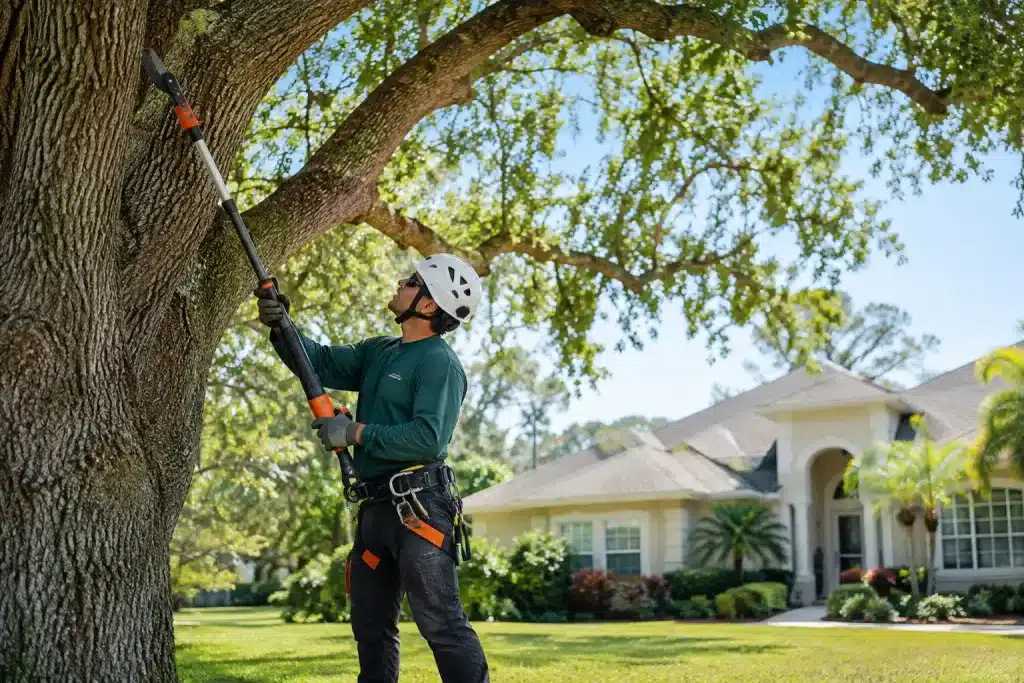
Pruning is one of the most useful services in a long-term maintenance plan, but it should have a specific purpose. Safety pruning removes dead or compromised branches. Clearance pruning creates appropriate space around structures, access points, and traffic areas. Selective thinning can reduce overcrowding within the canopy when done carefully.
The timing depends on the tree species, its condition, and the reason for pruning. In Central Florida, property owners often schedule preventative work before the strongest part of hurricane season. That approach can reduce the chance that deadwood or poorly attached limbs become airborne during high winds. However, storm preparation is not a reason to strip a tree bare. Over-pruning before severe weather can create a different set of problems.
Palm maintenance also requires sound judgment. Removing only dead or clearly declining fronds is often preferable to cutting healthy green fronds too early. Excessive removal can weaken the palm and leave it looking sparse. A professional should match the work to the species rather than applying the same approach to every tree on the property.
Avoid hiring a crew that recommends topping large trees as a routine solution. Topping means cutting back major limbs or the upper canopy indiscriminately. While it may appear to make a tree smaller quickly, it can lead to decay, weak sprouts, poor structure, and ongoing maintenance needs. In many cases, selective reduction or removal is the safer, more responsible choice.
Storm Preparation Starts Before the Forecast
Central Florida storms can turn ordinary tree defects into urgent property emergencies. Heavy rainfall softens soil, sustained wind loads weak branch connections, and saturated root zones can make already compromised trees less stable. Once a storm watch is issued, crews are often busy and safe working conditions may be limited.
The practical time to prepare is well before a named storm or a severe weather forecast. Inspect trees near roofs, vehicles, pool enclosures, play areas, fences, and electrical service lines. Remove deadwood, address branches with poor clearance, and have questionable trees evaluated while there is time to make a careful decision.
If a tree or limb does fail during a storm, keep people away from the area. Never approach downed power lines, and do not attempt to cut or move branches that may be under tension or tangled with utilities. Emergency tree response should focus first on making the site safer, protecting access, and preventing additional damage where conditions allow.
Tree Amigos Orlando has more than 25 years of local experience helping property owners address both planned maintenance and urgent tree hazards. Licensed and insured crews bring the equipment, training, and site awareness needed for work that is too risky for a homeowner or general maintenance team.
Tree Removal Is a Safety Decision, Not a Shortcut
Removing a tree is sometimes necessary, especially when there is severe decay, significant storm damage, disease-related decline, structural failure, or unavoidable conflict with a building or planned project. It is also one of the highest-risk jobs on a property. The size of the tree is only part of the equation. Nearby homes, utility lines, fences, roads, access limitations, and the tree’s direction of lean all affect the removal plan.
A professional crew may dismantle a tree in controlled sections rather than dropping it in one piece. This takes more planning, but it can be the right method when working near structures or in tight residential lots. The lowest quote is not always the lowest real cost if the contractor lacks proper insurance, equipment, or a clear safety plan.
Before authorizing removal, ask what is included in the scope of work, how the crew will protect the property, whether they are licensed and insured, and if permits or local requirements may apply. Rules can vary by municipality and by tree type, so a qualified local contractor can help property owners avoid preventable delays or compliance issues.
A Maintenance Plan Saves More Than an Emergency Call
Tree maintenance works best when it is proactive. A property does not need constant cutting, but it does benefit from periodic evaluation, especially after major weather events or construction activity. Root disturbance, changed drainage patterns, vehicle damage, and soil compaction can affect a tree long after the original work is finished.
For a typical residential property, an annual visual review is a practical starting point. Larger properties, mature canopies, high-traffic commercial sites, and trees close to buildings may need more frequent attention. The schedule should reflect the property’s actual risk, not a one-size-fits-all calendar.
Good tree care protects the investment already growing on your property. When you address small concerns early, use qualified professionals for hazardous work, and plan ahead of storm season, your trees can remain an asset instead of becoming the next unexpected repair.