
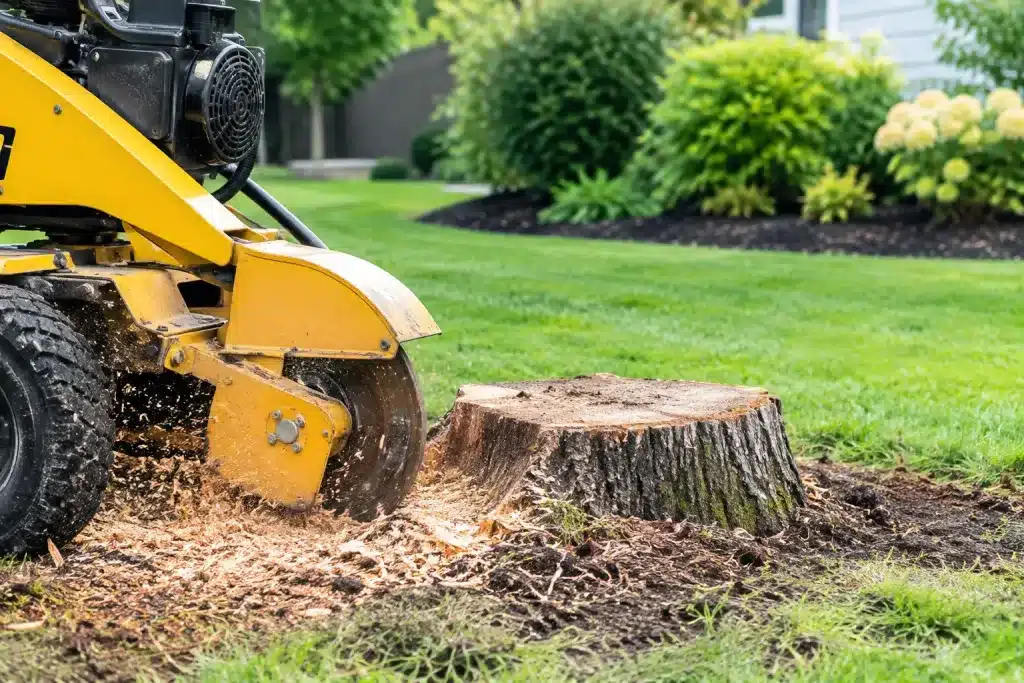
A fresh landscape can lose its appeal quickly when an old stump sits beneath new sod, plants, or hardscape. Scheduling stump grinding before landscaping gives your project a clean starting point, avoids unnecessary rework, and helps ensure the finished yard is built on stable ground rather than a hidden obstacle.
For Central Florida property owners, timing matters even more. Heavy seasonal rain, fast-growing roots, irrigation work, and hurricane-season cleanup can all affect what happens below the surface. Removing the stump first lets you see the condition of the surrounding soil and plan the rest of the property improvements with fewer surprises.
Why Stump Grinding Before Landscaping Matters
A stump is more than an eyesore. It can interfere with grading, mowing, drainage, irrigation lines, planting beds, fencing, walkways, and future construction. Covering it with mulch or soil may create a temporary visual fix, but the wood will continue breaking down underground. As that material decays, the soil above it can settle and leave a low spot in an otherwise level yard.
That settling is especially frustrating after new sod has been installed or a planting bed has been carefully shaped. Water may collect in the depression, roots from new plants may struggle, and the area can become soft underfoot. If the stump is close to a patio, driveway, or retaining feature, a contractor may have to work around it or return later to correct grade issues.
Grinding removes the visible stump and reduces the root flare below ground level. It does not remove every root across the property, and it does not instantly turn the area into finished planting soil. What it does provide is the proper starting point for grading, soil preparation, and design decisions.
Start With the Full Scope of the Outdoor Project
Before scheduling work, consider what will go in the area after the stump is removed. A simple lawn repair calls for a different approach than a new patio, pool deck, irrigation system, drainage swale, or commercial planting plan.
If you plan to install hardscape or build a structure near the former tree location, tell the tree service crew and your project contractor early. They may recommend a deeper grind or additional root removal based on the planned depth of the work. For standard lawn and bed preparation, grinding below the finished grade is usually enough, followed by proper backfilling and soil correction.
The size and species of the tree also matter. Large, mature trees can leave broad root systems and a significant amount of wood material beneath the surface. In some cases, roots near sidewalks, utilities, or foundations need to remain in place to prevent unnecessary disturbance. A qualified crew can explain what should be removed, what should stay, and how that affects the next phase of your project.
Plan for Soil, Grindings, and Final Grade
After the stump is ground, the remaining material is a mix of wood chips and soil. These grindings can be useful in limited amounts, but they should not simply be treated as finished topsoil. Fresh wood material breaks down over time and can temporarily affect nitrogen availability in the soil, which is not ideal for new grass, shrubs, or flowers.
For a healthy lawn or planting bed, most of the excess grindings should be removed or redistributed appropriately. The remaining hole should then be filled with clean soil, compacted lightly in layers, and graded so water drains away from structures. The exact amount of soil needed depends on stump size and how deeply the area was ground.
This step is easy to rush, but it makes a visible difference months later. A level repair today can settle after rain if the fill is loose or if a large amount of wood debris remains below the surface. Leave a little room for normal settlement, then monitor the area through the next wet season and add soil if needed.
Do Not Plant Immediately Into a Pocket of Wood Chips
It is tempting to add a plant directly over the former stump area and move on. That often creates poor growing conditions. New roots need consistent soil contact, moisture, and nutrients. A concentrated pocket of chips dries differently than surrounding soil and can settle unevenly as it decomposes.
If the area will become a planting bed, remove excess chips, bring in quality soil or compost as appropriate, and blend the transition into the surrounding ground. This gives plants a more consistent root zone and creates a cleaner, longer-lasting finish.
Protect Irrigation, Utilities, and Existing Features
Any excavation or grinding work should begin with a clear understanding of what is underground and nearby. Irrigation lines, landscape lighting wires, drainage pipes, pool equipment, septic components, utility lines, and invisible pet fencing can all be damaged if their location is unknown.
Property owners should point out known lines and features before the crew begins. For public utilities, proper locating procedures should be completed before work starts. Do not assume that a line is safe simply because it is buried deep or has not caused problems before. Stump roots can grow around buried systems, and the equipment used to access the stump needs enough clearance to operate safely.
Access deserves attention, too. A professional crew may need to bring equipment through a gate, across a side yard, or near a driveway. Clearing movable furniture, decorative pots, hoses, and vehicles from the route helps protect the property and keeps the job moving efficiently.
When It Makes Sense to Wait
Grinding first is usually the smart order, but there are exceptions. If a major construction project will soon change the elevation of the entire site, it may be more efficient to coordinate stump work with excavation and grading. Likewise, if the stump is in an area where a new structure will require deeper digging, the project team should decide whether complete removal is more practical than grinding alone.
Wet conditions can also affect timing. Florida soil can become saturated after prolonged rain, making it easier for heavy equipment to leave ruts or compact areas that are already soft. A reputable contractor will assess ground conditions and recommend the safest approach instead of forcing work that could damage the finished site.
For commercial properties, coordination is often the deciding factor. Work may need to be scheduled around tenant access, customer parking, school hours, delivery routes, or active maintenance crews. Planning stump removal before new improvements are installed keeps the work area open and reduces the chance of disrupting completed features.
Choose a Crew That Understands the Entire Property
Stump work looks straightforward from a distance, but the right result depends on more than running a machine over old wood. The crew should evaluate access, nearby structures, underground risks, soil conditions, and the intended use of the area. They should also carry proper licensing and insurance, especially when equipment is operating near homes, vehicles, utilities, or high-traffic commercial spaces.
Ask how deep the stump will be ground, whether grindings will be removed or left onsite, and what the site will look like when the work is complete. A clear answer helps you coordinate with your lawn, irrigation, or construction contractor without guessing about the next step.
Tree Amigos Orlando approaches outdoor property work with that full-site perspective. After more than 25 years serving Central Florida, the team understands that a clean stump removal job is not just about what disappears from view. It is about leaving the property ready for what comes next.
Before ordering sod, installing a new bed, or committing to a hardscape layout, have the old stump addressed properly. A stable, prepared surface gives every improvement a better chance to look good, drain well, and hold up over time.