That branch hanging over the driveway might look like a simple weekend project, until you realize it is carrying more weight than expected. When a storm hits or heavy wind pays a visit to the canopy, it reveals how fast an overgrown tree causes a problem. Trimming an old tree goes from routine maintenance to a perfect property and a potentially big liability.
Overgrown trees create real accidents for homes, businesses, and municipal properties. Limbs can scrape roofs, block visibility, interfere with walkways, and put pressure on fences or structures during heavy wind and rain. In Central Florida, fast growth over short seasons means it can overtake the property. The goal is not just an attractive finish; it is to reduce hazards, protect the tree’s health, and avoid turning one accident into a bigger one.
How to trim overgrown trees safely starts with the right assessment
Before making a single cut, take a full look at the tree from the ground. Check whether the overgrowth is mostly light outer branching or whether the tree has major structural issues. Dead limbs, cracked branch unions, cavities, fungus near the base, hanging limbs, or branches touching utility lines all change the plan immediately.
The first assessment matters because not every overgrown tree should be handled the same way. A smaller ornamental tree with low, flexible branches may be manageable for a careful property owner. A mature canopy tree over an active street (or roof) is not. Branches gather weight, length, tension, and proximity to structures all raise the stakes.
It also helps to ask why the tree became overgrown in the first place. Some trees were simply left unpruned too long. Others are responding to storm damage, poor earlier cuts, or stress that triggered a rush of sucker regrowth. If you only cut for appearance without understanding the growth pattern, the tree may respond with even more unstable sprouts.
Know when the job is not a DIY project
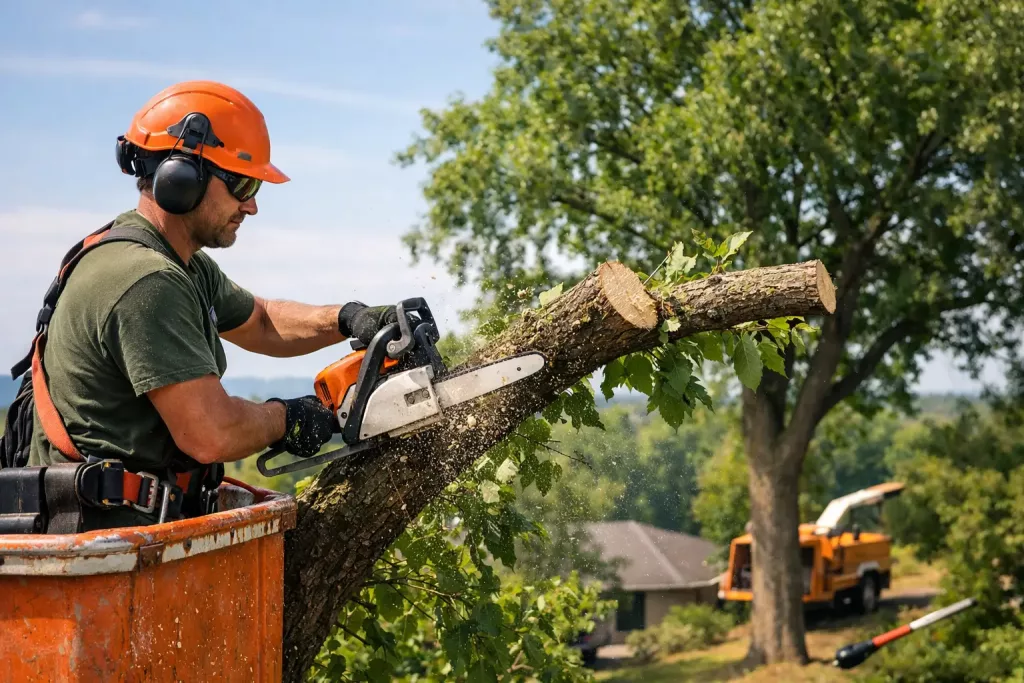
There is a point where safe trimming requires bucket trucks, proper rigging equipment, and broad experience. Any branch a large size, at high enough to damage a roof, difficult to predict where cut, or positioned above a target area, it should be treated as professional work. The same goes for trees near service lines, public roads, neighboring property, job-rated enclosures, or water retention facilities.
Ladders are where many people get into trouble. Free-climbing from a ladder while handling a saw is one of the most common ways a manageable task becomes an emergency. Branches can swing, bark can peel, footing can shift, and the person cutting is often in the fall zone. If you need to leave the ground to reach the branch, that is usually the moment to slow down and reconsider.
For homeowners and property managers, this is often the most useful rule: if you cannot control where the limb will go, you should not cut it yourself. Experience matters here. A minor weight swing is drawn like an art form from below.
The basic tools and safety gear that actually matter
If the tree is small enough and the branches are within safe reach from the ground, use the right equipment. A set of sharp pruning hand pruners work for small, low shoots. Loppers handle slightly thicker growth. A pole saw can safely reach higher branches, but requires a steady stance, clear visibility, and enough distance to avoid the fall zone.
Wear gloves, eye protection, long sleeves, durable pants, and sturdy boots with good traction. A hard hat is smart any time there is overhead work. Keep bystanders, pets, and vehicles clear of the work zone. If branches are under tension or likely to fall unpredictably, stop there.
One more word about equipment: your tools need to be sharp and clean. Dull blades force rough cuts and leave stubs more likely to fail. Clean tools reduce the chance of spreading disease between trees.
How to make cuts without damaging the tree
Over-pruning is one of the fastest ways to weaken a tree. The goal is selective reduction, not stripping the canopy. In most cases, you want to remove dead, broken, rubbing, or poorly attached branches first. After that, thin carefully to improve clearance and structure without taking too much live foliage.
A proper cut is made just outside the branch collar, which is the slightly swollen area where the branch joins the trunk or a larger limb. Cutting flush against the trunk removes this collar and limits the tree’s ability to heal. Leaving a long stub is not much better because it dies back and can invite decay.
For heavier limbs, use the three-cut method. First, make a small undercut a short distance from the branch collar. Second, make a top cut a little further out to remove the branch’s weight. Third, make the final clean cut just outside the collar. This prevents the bark from tearing down the trunk as the limb drops.
It is also wise to avoid removing too much at once. A common guideline is to keep live crown removal modest during a single season, depending on the tree’s size and age. Aggressive cutting may solve the immediate overgrowth issue, but it can stress the tree, trigger rapid growth, and lead to weak regrowth that creates future hazards.
Common mistakes when trimming overgrown trees
Topping is one of the worst mistakes property owners make. Cutting major limbs back to random stubs may seem like a fast fix for height or spread, but it causes huge wounds and often results in a rush of weakly attached shoots to grow back. These shoots can become a bigger hazard than the original limbs.
Another mistake is pruning at the wrong time for the tree species or the reason for pruning. Dead or broken limbs should be handled promptly, but heavy structural pruning is often best done during the dormant season. This reduces stress and improves recovery. It depends on the species, the tree’s health, and local environmental conditions.
People also tend to focus only on what they can see from one angle. A branch that looks easy to remove may be resting against another limb, tangled in the canopy, or poorly decayed. From the ground, these details are not easy to read.
Timing matters more than most people think
In Central Florida, we do not get to complain of long cold times. Hazard reduction comes first. But if the overgrown tree requires major structural cuts, timing impacts tree health.
In Florida, growth can be aggressive for much of the year, and storm preparation often drives pruning decisions. That said, trimming right before or during severe weather periods is not ideal, if the work is rushed or excessive. Post-storm pruning is driven by what needs to happen to make the site safe.
The better approach is proactive maintenance before problems stack up. Light, periodic thinning is better for the tree and usually less expensive than waiting until branches are crowding structures or hanging over occupied areas.
Special concerns for larger properties and commercial sites
Commercial properties, HOAs, retail centers, and multifamily sites face extra exposure when overgrown trees are left unchecked. Dense canopies block security lighting, signs, driveways, and building entrances. That is an appearance issue, a safety defect, property access, and liability.
On a busy site, trimming also needs coordination. You may need to safely direct ground control, pedestrian traffic, work hours, required vehicles, and debris control. In some cases, local permitting or tree protection requirements may also apply. That is another reason larger or more visible pruning jobs should be handled by a licensed and insured tree service that understands local guidelines.
When to call a professional tree service
If the tree is mature, storm-damaged, near utilities, split, leaning, or extending over a structure, bring in a professional. The same applies if earlier pruning left dense sucker growth or poor branch architecture that now needs correction. The job is required more than cutting tools; it requires judgment.
A qualified tree service uses proper equipment, works safely around structures, handles proper disposal, and plans for the property owner’s specific property layout. That professional evaluation is what prevents accidental damage, vehicle damage, or a bad cut.
Two things often define when tree services are called. Property owners who put safety first. For the tree, and the homes, cars, people around them. In trimming trees, knowing when an overgrown tree is beyond the experience of the caller is essential.
Overgrown trees carry a heavy toll by being ignored, and they carry a heavier toll by being cut incorrectly. A smart pruning decision protects the tree, the property, and everyone who lives around it – and that is a job worth doing the right way.