
- FAQ & Tree Advice, Safety & Removal
Post-Freeze Hazard Assessment: Is Your Orlando Tree Dead or Just Dormant?
Providing professional tree trimming and removal in Orlando, Florida, and surrounding areas.
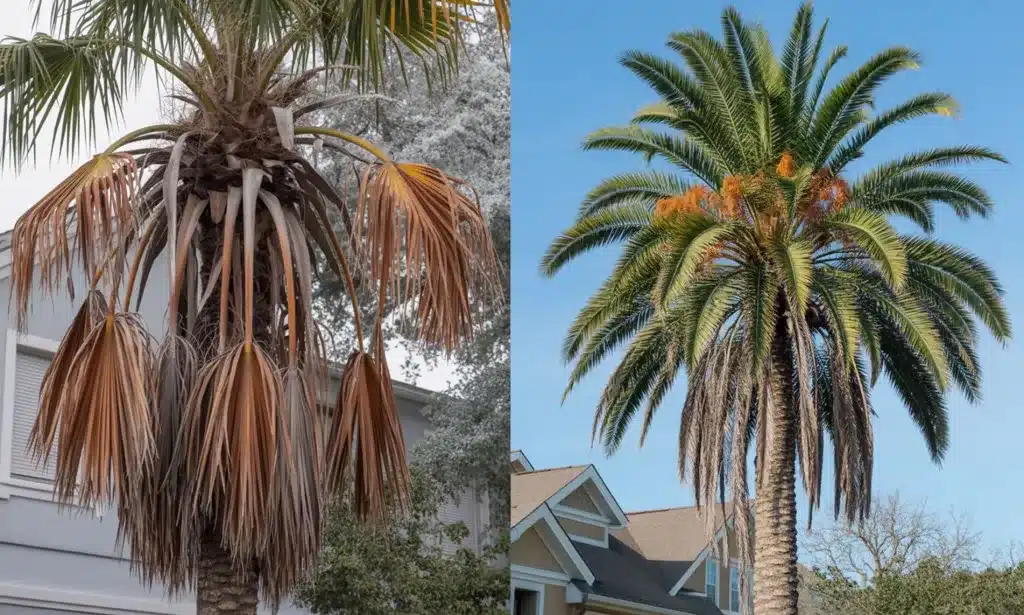
Table of Contents:
Central Florida’s recent dip into freezing temperatures has left many Orlando landscapes looking scorched. From the lush canopies of Winter Park to the citrus groves of West Orange, homeowners are staring at brown leaves and brittle branches, asking one critical question: Is my tree dead, or is it just sleeping?
In the wake of a freeze, making the wrong call can be expensive. Removing a tree that would have recovered is a waste of money and shade; however, leaving a truly dead tree standing creates a significant liability for your property. As the “City Beautiful” recovers from this cold snap, identifying hazard trees early is essential for safety.
The Biology of a Freeze: What Happens to Orlando Trees?
Most trees in Orlando, such as Live Oaks and Cypress, are resilient. However, tropical and semi-tropical species—like certain Palms, Avocados, and Citrus—undergo “freeze shock.” When the water inside the plant cells freezes, it expands, potentially bursting the cell walls and disrupting the tree’s vascular system.
Identifying “Freeze Shock” vs. Permanent Damage
Before you reach for the chainsaw, you must determine the extent of the damage. A tree with brown leaves is not necessarily a dead tree. In many cases, the tree is simply protecting its core by shedding damaged foliage to conserve energy.
1. The Scratch Test
Use your thumbnail or a small knife to gently scratch a young twig. If the layer immediately underneath (the cambium) is green and moist, the tree is alive. If it is brown, brittle, and dry, that specific limb is likely dead. Perform this test in several areas of the canopy for accuracy.
2. The Bud Check
Look closely at the tips of the branches. If the buds are plump and green inside, your tree is dormant and waiting for the Florida spring. If the buds are shriveled and fall off at a touch, the terminal growth has been compromised.
When Freeze Damage Necessitates Tree Removal
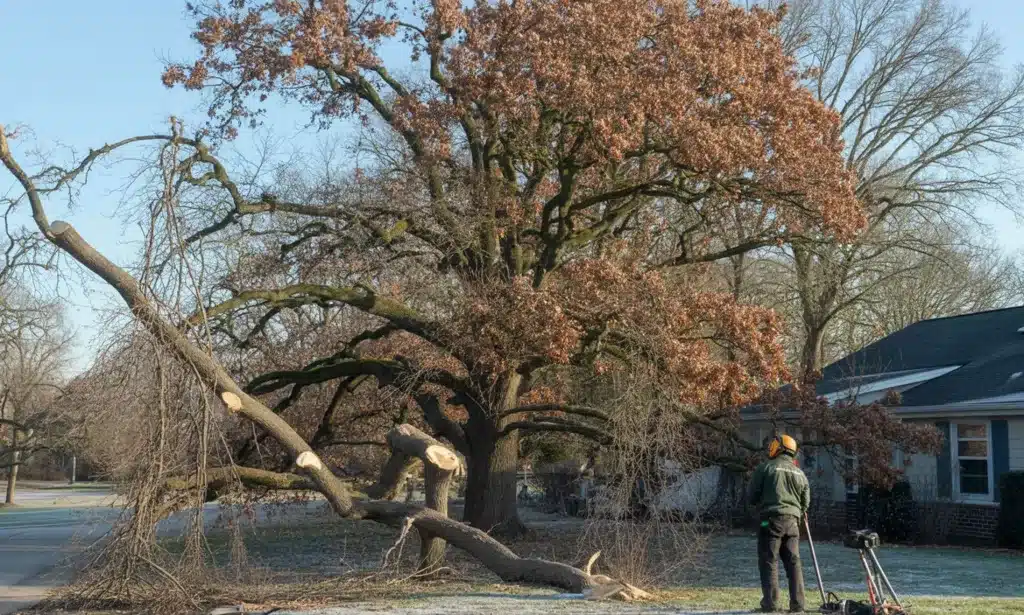
While we always advocate for saving a tree when possible, a severe freeze can be the “final straw” for an aging or already diseased tree. Identifying a dead tree after a freeze in Orlando is the first step in preventing property damage.
The Danger of Brittle Wood
When a tree dies from cold, the wood dries out rapidly. Unlike a healthy, “green” tree that has some flexibility in the wind, a freeze-killed tree becomes extremely brittle. In Orlando, where spring thunderstorms follow closely behind winter freezes, these “standing dead” trees become high-risk projectiles.
Signs a Tree is Beyond Saving
If you notice the following after a freeze, it is time to consult a professional for Tree Removal:
- Vertical Bark Cracks: Large cracks in the trunk (frost cracks) that reach the heartwood indicate structural failure.
- Mushy Trunk Bases: Specifically in Palms, a “soft” or oozing trunk after a freeze indicates internal rot.
- No New Growth by Late March: If the rest of Orlando is blooming and your tree remains skeletal, the vascular system has failed completely.
To Trim or Not to Trim? The Post-Freeze Dilemma
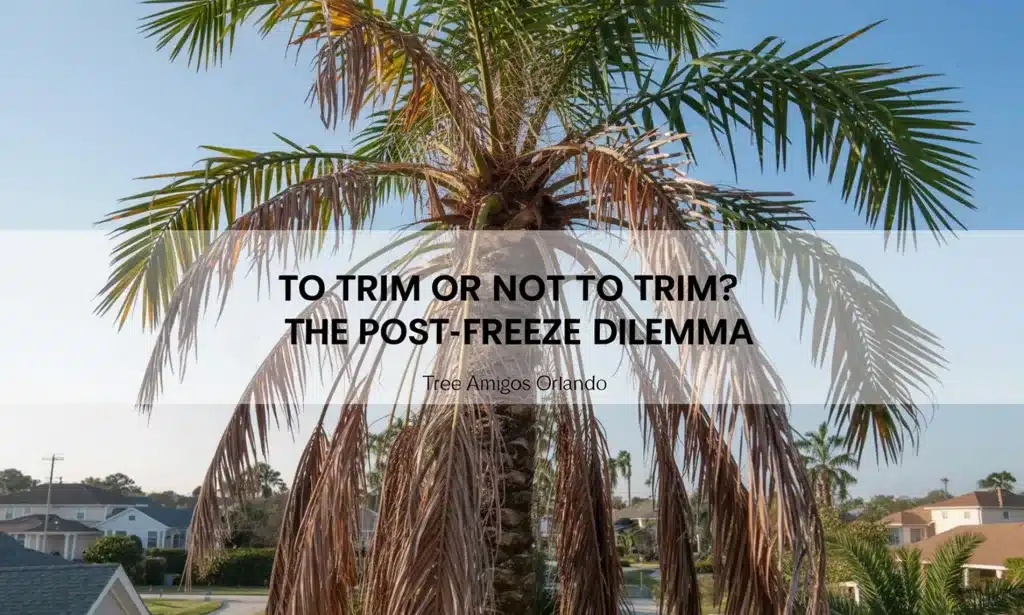
The most common mistake Orlando homeowners make is “clean-up pruning” too early. While the brown leaves are unsightly, they serve a biological purpose.
Why You Should Wait to Prune
The dead, brown leaves actually act as a layer of insulation for the rest of the tree. If you trim them off immediately, you expose the remaining healthy tissue to the next potential cold front. Wait until the “Last Frost Date” (typically mid-February for Orlando) before performing significant Tree Trimming.
[Internal Link Placeholder: Learn more about our Tree Trimming safety standards]
Liability and Safety: The Cost of Waiting Too Long
If a tree has been killed by the freeze and you fail to remove it, you may be held liable for negligence should it fall during a later storm. Insurance companies often look for signs of “pre-existing mortality.” A tree that died in January and fell in May is often classified as a maintenance failure rather than an “Act of God.”
Why Professional Assessment Matters
A certified arborist can perform a “weighted limb analysis” to see if the freeze has compromised the structural integrity of your larger oaks or elms. Tree Amigos Orlando provides the expert eye needed to distinguish between a temporary setback and a permanent hazard.
Conclusion: Professional Assessment is Key
Don’t let a freeze turn into a fallen tree emergency. By performing a Post-Freeze Hazard Assessment now, you protect your home, your family, and your remaining landscape. Whether your tree needs surgical Tree Trimming to bounce back or full Tree Removal to ensure safety, acting with expert guidance is the best path forward.
Posted onTrustindex verifies that the original source of the review is Google. I have used Tree Amigos two times. They gave me a quote and came quickly to do the job. They were very professional and kind and did superb work! I would definitely recommend them and will use them again for tree trimming maintenance.Posted onTrustindex verifies that the original source of the review is Google. I have used them in the past, they lived up to my previous experience with them. Easy to work with and very efficient. Will definitely use them again in the future.Posted onTrustindex verifies that the original source of the review is Google. We had 4 tall pine trees removed by the Tree Amigos team led by Luis and they performed over and above what was promised. Highly recommended especially for difficult tree removal jobs.Posted onTrustindex verifies that the original source of the review is Google. Luis and his crew did a great job. I’m very pleased.Posted onTrustindex verifies that the original source of the review is Google. I have used Tree Amigos many times and always had a positive experience. Recently had a huge tree taken down in my backyard and couldn’t be more pleased with their work!Posted onTrustindex verifies that the original source of the review is Google. Tree Amigos is always fast and very fair priced.Posted onTrustindex verifies that the original source of the review is Google. Luis was super responsive and provided a fair price. They were able to grind two stumps by the next business day and were understanding of the needs on site.Posted onTrustindex verifies that the original source of the review is Google. I have had Tree Amigos help with tree trimming and sod replacement. Great team with great service.Load more