
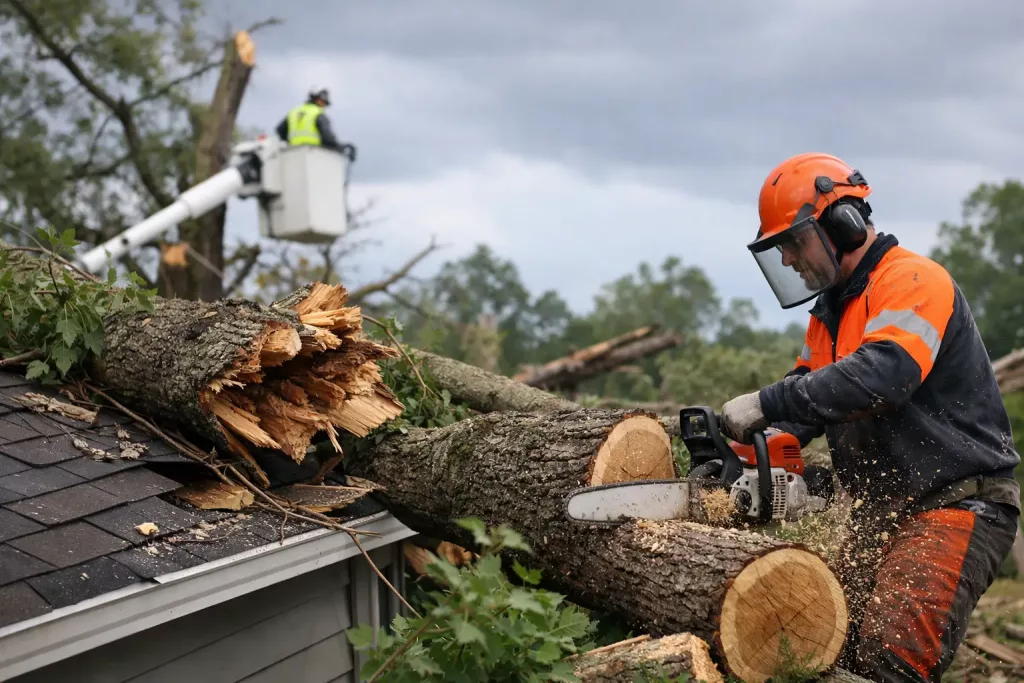
When a severe storm rolls through, leaving a trail of destruction in its wake, the immediate aftermath can be overwhelming. High winds, heavy rain, and lightning strikes can wreak havoc on your property, especially on the trees that surround your home or business.
In these chaotic moments, understanding the vital role of emergency tree removal is crucial for ensuring the safety and security of your property. Fallen or compromised trees pose significant risks, from structural damage to personal injury, and addressing these hazards promptly is not just a matter of aesthetics—it’s a critical safety measure.
Table of Contents
- What counts as emergency tree removal after storm events
- What to do first after storm tree damage
- Why storm-damaged trees are more dangerous than they look
- When removal is necessary and when it depends
- How a professional emergency response usually works
- Choosing the right company under pressure
- Common mistakes property owners make after a storm
- After the emergency, think about the next storm
What counts as emergency tree removal after storm events
Not every broken branch constitutes an immediate emergency. However, certain situations demand immediate attention to prevent further harm. A tree that has crashed into a house, vehicle, or power line is a clear emergency. Similarly, a tree that is leaning dangerously over a structure, driveway, or public walkway is a severe hazard. Even a tree that appears standing but has a cracked trunk or lifted root system can fail at any moment, especially if the ground is saturated from heavy rain.
The key distinction is the immediate threat to life, property, or essential services. If a damaged tree blocks a critical access point, compromises a building’s structural integrity, or creates a fire hazard by touching power lines, it requires emergency response. It’s about mitigating the immediate danger, not just cleaning up the yard.
What to do first after storm tree damage
Your first priority is always safety. Keep clear of any fallen trees or branches, especially if they are tangled with power lines. Assume all downed lines are live and extremely dangerous. Keep children and pets indoors and away from the affected area until professionals have secured it.
If a tree has fallen on your home and caused structural damage, evacuate immediately if you suspect the building is compromised. Once everyone is safe, call your local emergency services if there are injuries or immediate threats to public safety.
Next, contact a reputable emergency tree removal service. Do not attempt to move or cut the tree yourself. Professional arborists have the training, equipment, and experience to safely handle dangerous situations. While you wait for help to arrive, take photos of the damage from a safe distance for insurance purposes, but do not risk your safety to get a better shot.
Why storm-damaged trees are more dangerous than they look
Storm-damaged trees are incredibly unpredictable. The structural integrity of a tree can be severely compromised by high winds, lightning, or heavy rain, even if the damage isn’t entirely visible. Internal fractures, weakened roots, and heavy, broken branches hanging precariously—often called “widow makers”—can fall without warning.
The immense weight of a tree or large branch is often underestimated. Removing these hazards requires specialized equipment and techniques to ensure that the tree doesn’t shift unexpectedly and cause further damage or injury. Professionals use cranes, ropes, and specialized rigging to safely dismantle and remove the dangerous sections.
When removal is necessary and when it depends
Deciding whether a tree needs to be removed entirely or if it can be saved often requires a professional assessment. A tree with significant trunk damage, extensive root lifting, or a completely shattered canopy usually needs to be removed for safety.
However, trees are resilient. If a tree has lost only minor branches and its structural integrity is intact, pruning and restorative care might be sufficient. A certified arborist can evaluate the tree’s health, stability, and the extent of the damage to determine the best course of action. They can advise you on whether the tree can recover or if removal is the only safe option.
How a professional emergency response usually works
When you contact a professional service for emergency tree removal, their first step is to assess the situation and prioritize the most critical hazards. Upon arrival, they will secure the area to prevent further injury or damage.
The primary goal during an emergency response is to remove the immediate threat. This often involves stabilizing the tree and carefully removing the sections that pose a danger to structures or power lines. They will use specialized equipment to safely lower heavy branches and trunk sections to the ground.
Once the immediate hazard is mitigated, the crew will typically clear the debris to ensure access to the property. However, full stump removal and complete site cleanup might be scheduled for a later date, depending on the severity of the storm and the demand for emergency services.
Choosing the right company under pressure
In the aftermath of a storm, you might feel pressured to hire the first company that answers the phone. However, choosing the right company is crucial to ensure the job is done safely and correctly.
Look for a company that is fully licensed and insured. This is critical to protect yourself from liability in case of accidents or further damage during the removal process. Ask for proof of insurance and verify their credentials. Ensure they employ certified arborists who have the expertise to assess the situation properly.
Be wary of “storm chasers”—individuals or companies that show up unannounced after a storm, demanding payment upfront. Reputable companies will provide a clear estimate and a contract outlining the scope of work. They will also communicate clearly about their process, timeline, and pricing.
Common mistakes property owners make after a storm
One of the most common mistakes is attempting a DIY tree removal. Chainsaws and falling trees are a dangerous combination, especially when dealing with unpredictable storm damage. This often leads to severe injuries or exacerbated property damage.
Another mistake is hiring an unqualified or uninsured individual based solely on a low price. This can result in poor workmanship, hidden costs, or significant liability issues if something goes wrong.
Finally, failing to document the damage for insurance purposes can complicate the claims process. Take clear photos and keep all receipts and contracts from the tree removal service to support your claim.
After the emergency, think about the next storm
Once the immediate crisis is resolved, it’s important to think about the future. Proactive tree care can significantly reduce the risk of damage during the next storm. Regular pruning, removing dead or weak branches, and assessing the overall health of your trees can make them more resilient to high winds and heavy rain.
Consider scheduling regular inspections with a certified arborist to identify and address potential hazards before a storm hits. Taking preventative measures can save you time, money, and stress in the long run, ensuring your property remains safe and secure.